
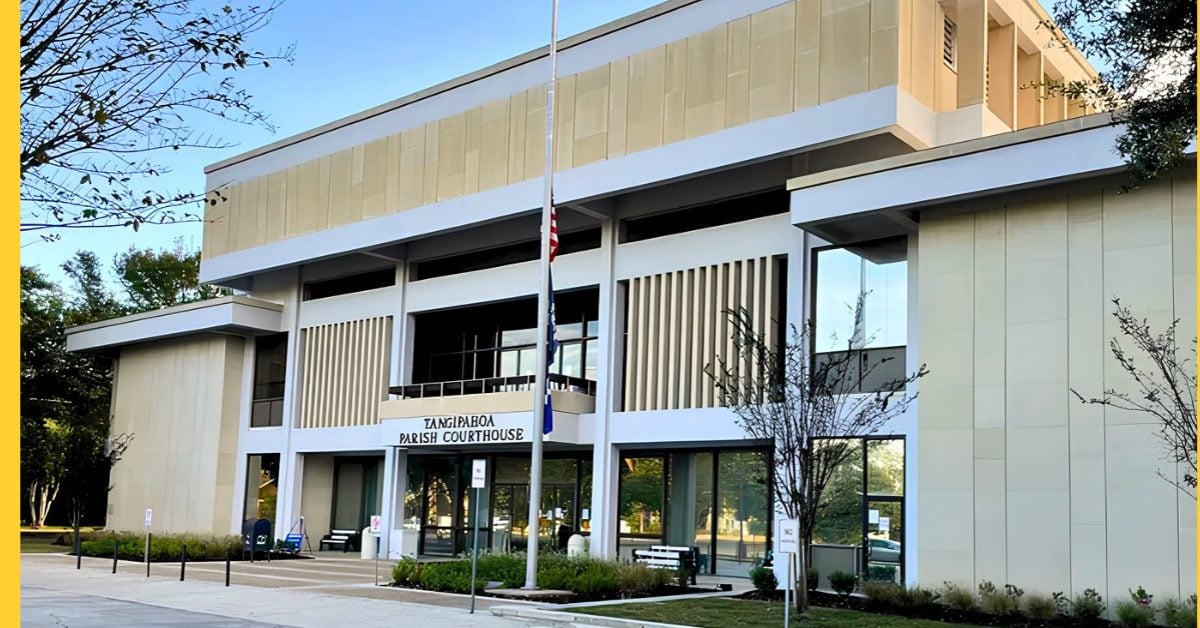
A Louisiana court barred 10 prediction market operators on Thursday, including Kalshi, Polymarket US, Robinhood and Coinbase, from offering event contracts to anyone in the state, hours after Attorney General Liz Murrill filed suit. The 21st Judicial District Court in Tangipahoa Parish issued the temporary restraining order (TRO) ex parte, meaning the judge granted it on the state’s application alone, before the platforms could appear or respond.
Two things made that possible. A state law effective Aug. 1 lets courts enjoin unlicensed online gambling and provides that a violation “shall conclusively be determined irreparable harm,” removing the proof-of-harm requirement that would typically slow emergency relief. And although Kalshi and Polymarket US had already challenged Louisiana in federal court, no federal judge has ruled in those cases, leaving the state free to act in state court.
It is the first TRO a state has won against prediction market operators on the day it sued, gaming attorney Daniel Wallach pointed out in a post announcing the court order. He adds that it’s also the first single legal action to target nearly the entire field.
The petition names 31 entities, reaching beyond the exchanges themselves to include clearinghouses, futures commission merchants and parent companies. The order lands as the Supreme Court weighs New Jersey’s petition to settle the Kalshi sports fight.
Louisiana order takes aim at the whole transaction chain
The defendants enjoined in the order include: Kalshi, Polymarket, Robinhood, Crypto.com, Coinbase, Novig, Underdog, Gemini Titan, ForecastEx and ProphetX.
The TRO binds the named defendants’ “principals, officers, agents, employees, counsel, and all persons in active concert or participation with them who receive actual knowledge of this Order by personal service or otherwise.” The order could also reach a market maker that keeps supplying liquidity to Louisiana users after receiving notice, Wallach noted.
The TRO defines “event contract” as “any sum of money or representation of value risked by a person on an occurrence associated with an event for which the outcome is uncertain.”
The state of Louisiana’s petition for TRO, preliminary injunction, civil penalties, and other relief, “by and through its Attorney General Liz Murrill,” starts: “In today’s digital betting market, virtually anything can become a wager.” It lists as examples Kalshi markets on Senate control, Trump’s next press secretary, the Oscar for Best Picture, the Fed funds rate, Trump mention markets and college football conference winners.
What’s in the Nov. 12 court order
The court order dictates that the defendants are temporarily restrained and enjoined from “operating, offering, listing, accepting, clearing, settling, brokering, making a market in, or otherwise facilitating or offering any ‘event contract’ (also known as a wager) from, to, or on behalf of any person located in the state of Louisiana without a valid license and permit…” It specifically covers contracts related to sports, elections, awards events, “and all others considered sports wagering under La. R.S. 27.”
The order also says the named operators must geofence the state, and they may not represent that their contracts are “lawful, licensed, or authorized in Louisiana,” a ban the order ties to the state’s Unfair Trade Practices Act.
Missing from the defendants list are the sportsbooks that run their own prediction markets. FanDuel, DraftKings and Fanatics hold Louisiana sports wagering licenses. A December 2025 Louisiana Gaming Control Board advisory told sportsbook licensees that illegal sports wagering “may occur whether the contract is listed on an exchange regulated by the Commodity Futures Trading Commission (‘CFTC’) or elsewhere,” and warned licensees their suitability was at stake.
FanDuel’s own availability map lists only its sportsbook in Louisiana, not FanDuel Predicts. Licensed operators assured the state they would not offer prediction markets, The Advocate reported in March.
Louisiana vs. prediction markets escalation
HB 883, signed by Gov. Jeff Landry and effective Aug. 1, lets courts “issue any relief it deems appropriate,” including website takedowns and bank-account freezes. It also reaches payment processors and platform and geolocation providers.
The TRO cites that provision. It required no bond because the state is the plaintiff, and no notice because, the order says, defendants “immediately received constructive notice of the Petition through media and other outlets.” The state also skipped the law’s 10-day cease-and-desist step.
Kalshi sued Murrill pre-emptively in the Western District of Louisiana on Oct. 23, and Polymarket US filed its own federal challenge on Oct. 27, citing preemption and the Commerce Clause.
On Thursday, the same day as Murrill’s petition and the judge’s order, Kalshi asked U.S. District Judge Jerry Edwards Jr. for its own TRO.
“Based on recent discussions with representatives of the state of Louisiana, Kalshi believes that the State will initiate an action against Kalshi in state court,” the motion said, citing “imminent criminal, administrative, and forfeiture exposure.”
Operators reject the gambling framing, arguing their event contracts are financial derivatives under the CFTC’s exclusive jurisdiction.
“These event contracts are a type of derivative, and their trading is regulated by the federal government,” Kalshi wrote in Thursday’s motion. In its October complaint, Kalshi also argued that the gambling-by-computer statute exempts transactions “occurring on a stock or commodities exchange, brokerage house, or similar entity.”
The stakes and what comes next
The civil enforcement petition also seeks civil penalties, restitution and disgorgement.
“Those remedies could expose the industry to financial liability for past transactions, not merely restrictions on future operations,” Wallach wrote.
Louisiana is the 13th state to bring a civil enforcement action against prediction market operators, according to Wallach, following Massachusetts, Nevada, Michigan, Washington, Wisconsin, Rhode Island, New Mexico, Kentucky, New York, Connecticut, Utah and Arkansas.
The TRO expires after 10 days unless the court extends it or the defendants consent to a longer period. The preliminary injunction hearing, scheduled on Monday, Nov. 30 will test whether the order holds once the operators are heard, while Kalshi’s pending federal motion will show whether a federal court is willing to step in.