
Sen. Adam Schiff accused Commodity Futures Trading Commission (CFTC) Chairman Michael Selig of misleading lawmakers about his approach to sports prediction markets during a Tuesday confirmation hearing for two prospective commissioners, as senators questioned the nominees about the agency’s expanding role in overseeing event contracts.
Schiff (D-Calif.) said Selig had repeatedly promised during his own confirmation hearing last year to approach the legality of sports event contracts with a “blank slate” and defer to the courts. Since taking office, however, Selig has aggressively defended federal jurisdiction over prediction markets and challenged state-imposed geographic restrictions.
“I don’t know that I’ve ever been so blatantly deceived by a nominee before,” Schiff said. “This is certainly not the kind of leadership that we need at CFTC.”
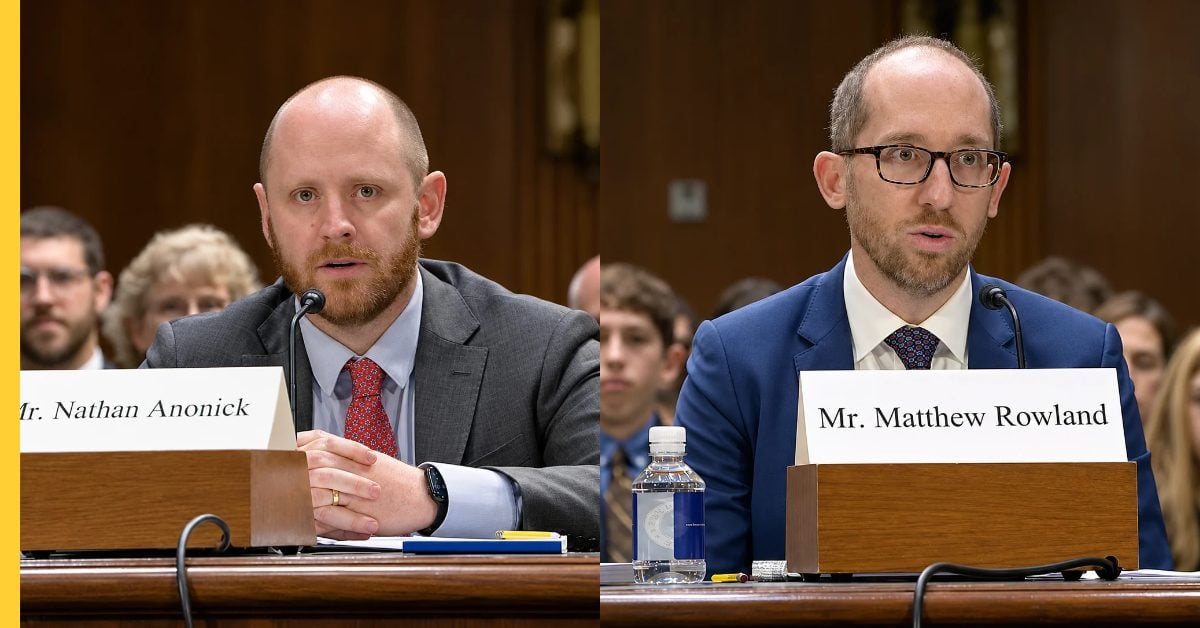
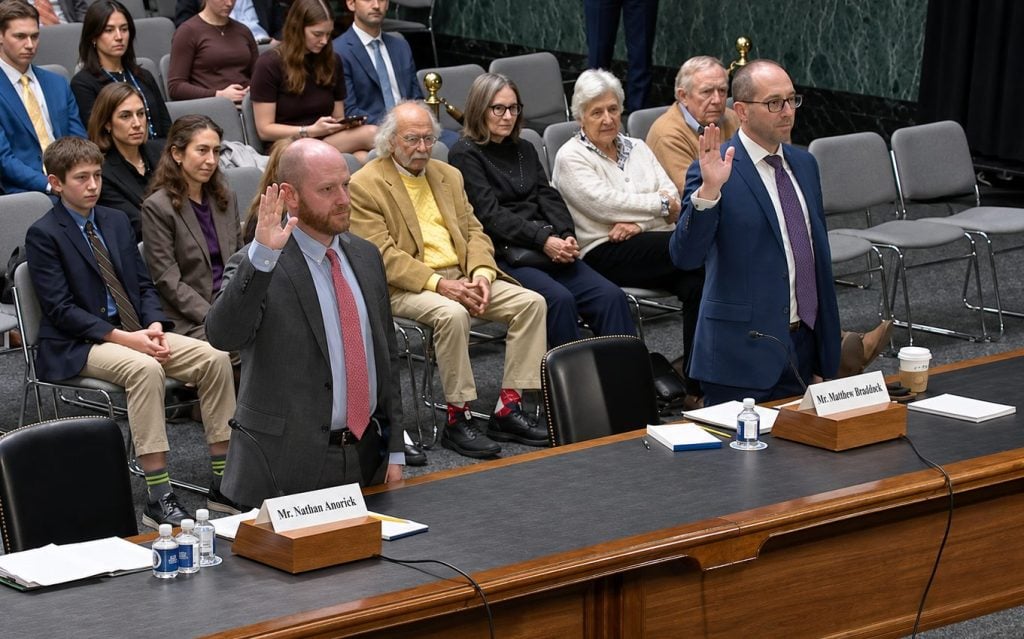
The criticism came as Nathan Anonick, the Republican nominee, and Matthew Rowland, the Democratic nominee, faced extensive questioning before the Senate Agriculture Committee about whether sports event contracts constitute gambling and how the CFTC should handle disputes with states and tribal governments. Neither nominee committed to a definitive position on the legality of the contracts.
The hearing also exposed concerns about the agency’s shrinking enforcement workforce, the need for stronger retail customer protections and Selig’s leadership of what has been a one-member commission. If confirmed, Anonick and Rowland would bring the CFTC’s membership to three of its five authorized commissioners.
Schiff challenges Selig’s ‘blank slate’ pledge
Schiff revisited Selig’s 2025 confirmation testimony, reading several responses in which the chairman promised not to prejudge whether sports event contracts constituted gambling and said he would defer to federal courts.
“I don’t know whether he was just lying to us, or once he was confirmed, he had some kind of an epiphany. But he has been anything but a blank slate,” Schiff said.
“He has not looked to the courts. He’s filed briefs to tell the courts what to do, and when the courts have ruled in a way that doesn’t favor the prediction markets, he has basically told companies to ignore the courts, ignore court orders, don’t geofence, don’t respect state or tribal laws, anything but a blank slate.”
Turning to Anonick, Schiff asked whether a prediction-market contract on the outcome of Thursday’s Colts-Texans NFL game constituted a sports bet. Anonick repeatedly described the question as legally complex because federal courts had reached conflicting decisions.
Asked whether he would approach the issue independently or follow Selig’s lead, Anonick declined to prejudge how he would vote on future matters.
“I’m not trying to be evasive. I don’t know a position I would take on anything if I was confirmed and there was a matter before me, and I would take the role as commissioner seriously,” Anonick said. “I think that means a robust, thorough fact-finding process. That means talking to the Office of General Counsel. That means talking to outside counsel. That means talking to the tribes and the states and all of the stakeholders and anything before me would be my own decision, and I would own that.”
Schiff closed by urging Anonick to honor that commitment, saying he hoped he would not have to revisit the nominee’s testimony at a future hearing.
Nominees pressed on state and tribal gaming authority
Sen. Tina Smith (D-Minn.) challenged the distinction between sports wagers and event contracts, arguing that federal law protects the authority of states and tribal governments to regulate gaming.
Smith cited the CFTC’s lawsuits against states seeking to restrict sports prediction markets and asked whether there was any practical difference between a sports wager and an event contract tied to the same outcome.
Rowland acknowledged the conflicting federal court decisions and declined to take a position on the ongoing litigation.
“I think, as a matter of just pure practicality, I understand the argument you’re making,” Rowland said. “I’m certainly very sympathetic to the concerns that the states and tribes have raised, and would kind of want to work with them further if I were confirmed on that.”
Anonick also cited the legal uncertainty, saying he had heard concerns from tribal representatives and would consider their perspectives before making regulatory decisions.
Smith pushed back on Anonick’s characterization of the dispute as an emotionally charged issue, arguing that it concerned established legal rights under the Indian Gaming Regulatory Act and state authority over sports gaming.
Earlier, Ranking Member Amy Klobuchar (D-Minn.) asked Rowland about the CFTC’s responsibility to evaluate whether event contracts involving gaming and other restricted activities are contrary to the public interest.
“I think that it’s important that as part of that rulemaking, which is still ongoing and which I hope to be able to participate in, if confirmed, that we really think long and hard about balancing the public interest against the kind of economic usefulness of these contracts,” Rowland said.
Rowland also anticipated a possible Supreme Court ruling on the dispute within the next two terms and said the CFTC would be bound by the decision.
Retail protections and staffing cuts draw scrutiny
Klobuchar also questioned how the CFTC should respond to increasing retail participation in prediction markets and digital-asset derivatives, particularly as platforms introduce new products to less experienced traders.
Rowland said the agency should consider strengthening customer protections, rules governing conflicts of interest at vertically integrated platforms and marketing and advertising requirements.
“Retail customers increasingly participate in our markets, creating the need to re-examine and strengthen our customer protection rules,” Rowland said in his opening testimony.
Sen. Michael Bennet (D-Colo.) raised concerns about whether the agency has sufficient resources to oversee its growing responsibilities, including monitoring markets for fraud, manipulation and insider trading.
“Between 2024 and this year, the number of contracts listed for trading has increased 167%. But over that same period, the CFTC has lost about 25% of the staff,” Bennet said.
Rowland, a longtime CFTC attorney, called for rebuilding the agency’s workforce and enforcement capabilities.
“As a long-tenured CFTC employee and a member of the National Treasury Employees Union, I am aware of the significant staff attrition and disruption that took place in 2025, and I look forward to working with Chairman Selig and my fellow commissioners to get back to appropriate staffing levels,” he said.
Rowland also advocated returning the CFTC’s enforcement program to its historical size and level of activity.
Anonick, meanwhile, said he would seek detailed briefings on current staffing levels, hiring plans and technical expertise gaps before determining where additional resources are needed.
Nominees back bipartisan commission amid enforcement concerns
Sen. Raphael Warnock (D-Ga.) pressed both nominees on the importance of restoring the CFTC’s full five-member bipartisan commission, rather than continuing under a single chairman.
Both agreed that a fully constituted commission was essential and said they would support filling the remaining vacancies.
“I am hopeful that if confirmed, Mr. Anonick and I can demonstrate through our service the benefits of a bipartisan commission,” Rowland said.
Bennet also asked whether the nominees would support extending public comment periods for significant CFTC rulemakings, particularly those initiated while Selig has been the agency’s sole commissioner. Both expressed support for ensuring stakeholders have adequate opportunities to participate.
Warnock separately raised allegations that political appointees had interfered with CFTC investigations involving companies with ties to President Donald Trump’s family. He asked whether those connections should influence how the agency treats regulated firms.
“I think that the law needs to be enforced fairly, without fear or favor, and so the answer is no,” Rowland said.
Anonick agreed that the law should apply equally regardless of political connections and said he would examine allegations of interference if confirmed.
The next step is a Senate Agriculture Committee vote on whether to advance the nominees to the full Senate for confirmation. Committee Chairman John Boozman (R-Ark.) expressed hope that the nominations could advance quickly.
If confirmed, Anonick and Rowland would join Selig on the commission, restoring bipartisan representation but leaving two of the agency’s five seats vacant.