
The decision carries legal implications, but Kalshi has already filed an appeal against the ruling to contest the denial.
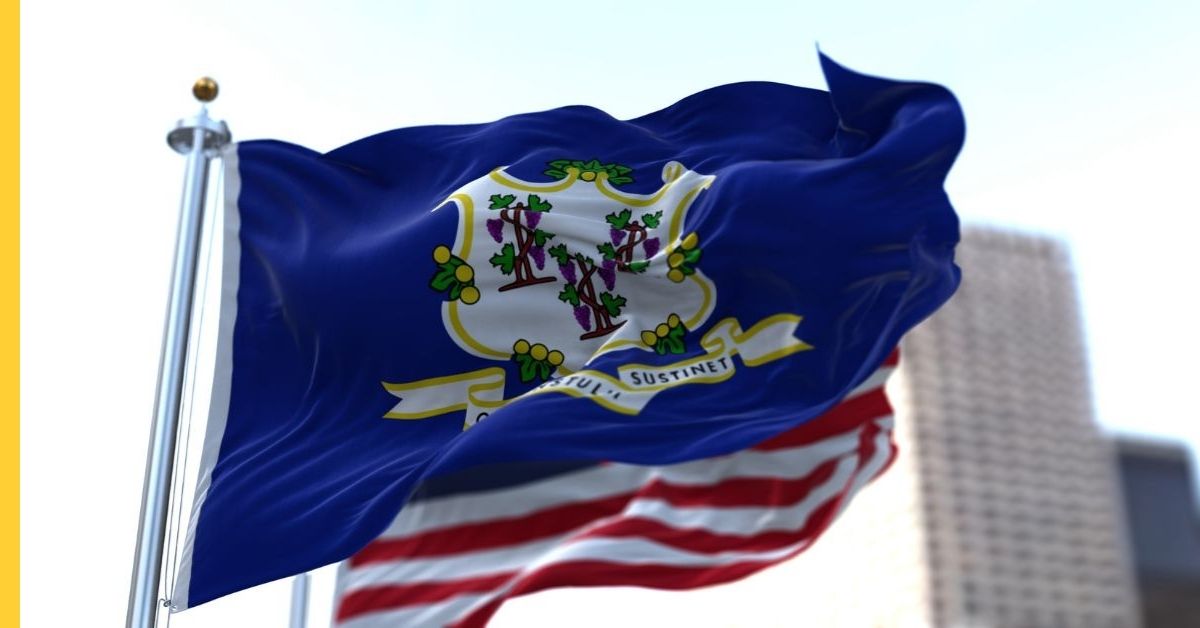
The Connecticut Department of Consumer Protection (DCP) is one of many state-level regulators to have served Kalshi with a cease-and-desist letter on the basis that the operator was offering an unlicensed gambling product.
Kalshi sued for an injunction using the pre-emption argument, which claims that the Commodity Exchange Act (CEA) supersedes the state’s right to regulate a CFTC-licensed company.
This argument has been received unsympathetically in various states.
Injunctions were denied in Maryland, Ohio, New York and Arizona, sports contracts have been blocked in Massachusetts, and geo-fencing orders have been issued in Nevada and Michigan.
However only Nevada’s Judge Anthony Gordon has been as strong as Oliver in his conclusion to refute both the pre-emption argument and assert that the contracts are wagers, rather than swaps.
The Judge Gordon precedent
The court’s thinking, laid out in its motion to deny the preliminary injunction, uses much of the Nevada case and Judge Gordon’s interpretations as precedent.
Oliver used many of the arguments from that lawsuit to alight on his decision that Kalshi’s sports event contracts were wrongly categorised as swaps under the CEA.
Apart from in Nevada, this deeper question has been largely skirted around by other courts, even as they ruled that the pre-emption argument didn’t hold.
Both Oliver and Gordon have ultimately landed on the conclusion that if they are not swaps, they are sports wagers.
Oliver begins his conclusion by quoting the Kalshi vs Hendrick case directly, writing: “Kalshi characterizes its sports-related event contracts in various ways, but at bottom, they are sports wagers.”
He adds: “The court declines to conclude either that these sports wagers are properly categorised as swaps and fall under the CFTC’s authority, or that Congress clearly displaced Connecticut’s traditional authority to regulate sports wagering and vested that authority in the CFTC, an agency that has not historically regulated sports wagering and has not exercised meaningful oversight over Kalshi’s sports event contracts.”
The criminal implications
More than just a defeat of its right to operate, the extent of Oliver’s conclusion exposes Kalshi to criminal enforcement under Connecticut law.
There are two class A misdemeanours that Kalshi could feasibly be accused of if the ruling stands pending appeal.
Either way, the appeal that Kalshi has lodged means that the enforcement will likely be delayed.
Though, as gaming attorney Daniel Wallach notes: “This raises the stakes…”
Circuit split
Wallach has said that the next step will be to ask the Court of Appeals for the Second Circuit to enter an immediate injunction to block state-law enforcement.
So far, the Third Circuit has been favourable towards prediction markets, while the Sixth Circuit was not.
The more appellate rulings reached that demonstrate a circuit split, the more likely it becomes that the Supreme Court will step in.
Geo-fencing deadlines
Even more imminent for Kalshi’s busy legal team are two deadlines mentioned in the Connecticut court ruling.
These are reminders that the operator has been given until August 12 (tomorrow) to comply with its geo-fencing orders in Nevada and Michigan.
Kalshi’s previous in-house geo-fencing effort in Nevada came in for criticism, with the operator having spent just $190,000 on a proprietary means of blocking residents from the website.
The Nevada court deemed the solution inadequate, and from tomorrow, Kalshi’s new partnership with GeoComply will be put to the test.
Penalty fines of $120,000 per day will follow if the geo-fencing fails to function as it should.