
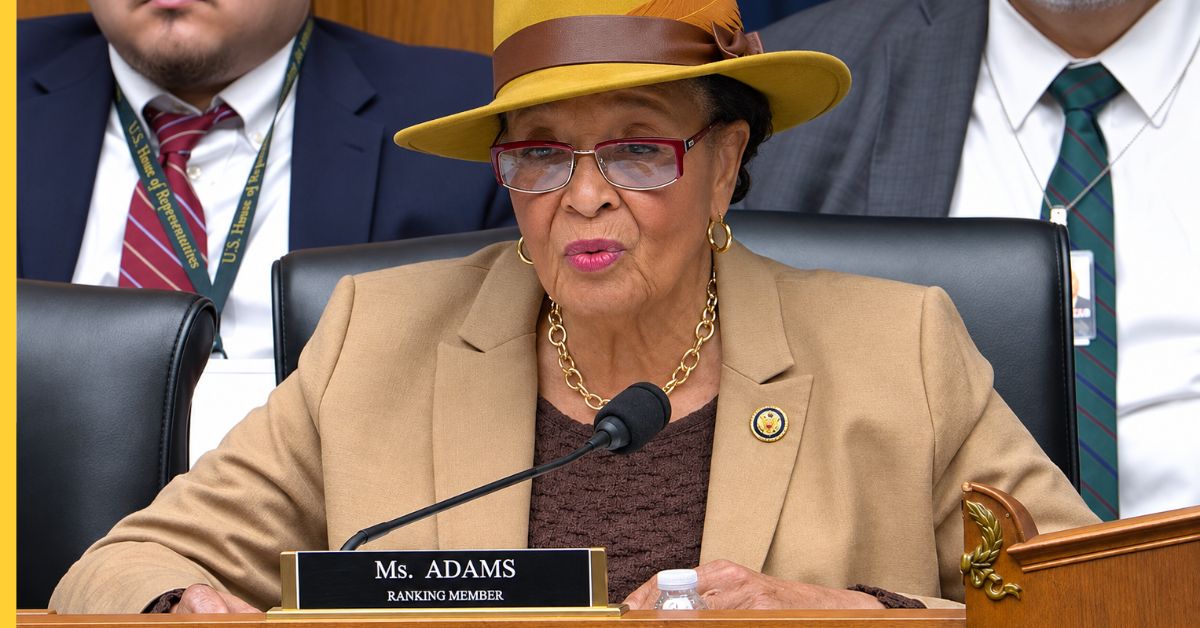
Prediction markets are undermining state sports betting protections, Rep. Alma Adams warned Wednesday as a US congressional hearing on gambling among college students turned to concerns about federal oversight of sports event contracts.
Adams (D-N.C.), the ranking Democrat on the House Higher Education and Workforce Development Subcommittee, pointed to state laws establishing age limits, licensing requirements and consumer protections for sports betting.
“Those laws reflect the judgment of voters and their elected representatives. Prediction markets have blown a hole straight through them,” she said in her opening statement.
Adams singled out Kalshi and Polymarket, which allow customers 18 and older to trade on sports outcomes, compared with the 21-year minimum at most state-regulated sportsbooks. Massachusetts Gaming Commission chair Jordan Maynard, a witness testifying at the hearing, echoed her concerns, arguing that prediction markets offer similar products without complying with state gambling protections.
The Nov. 11 hearing, titled “The Rise of Sports Gambling on College Campuses,” was held by the House Committee on Education and the Workforce. It was not specifically about prediction markets; much of the testimony and questioning focused on sports betting addiction, treatment, prevention, student mental health and funding for campus support programs.
But prediction markets repeatedly entered the discussion as lawmakers examined protections for young adults and the competing roles of federal and state regulators.
“Online sportsbooks and prediction market apps have placed miniature casinos in the palms of our hands, making placing a bet as easy as checking the weather,” Rep. Michael Baumgartner (R-Wash.), who chaired the hearing, said in his opening remarks.
Adams questions CFTC oversight of prediction markets
Adams accused the Commodity Futures Trading Commission (CFTC) of failing to adequately oversee sports event contracts, pointing to the NCAA’s January request to suspend college sports prediction markets until additional safeguards are established.
“The CFTC is supposed to be the cop on the beat. The NCAA has asked it to suspend college sports prediction markets until real safeguards are in place. Instead, the cop seems to have left the beat, so we have to ask why,” Adams said.
The NCAA has called for age and advertising restrictions, enhanced integrity monitoring, a prohibition on college player props, anti-harassment measures and resources to address gambling-related harm.
Adams also raised questions about Donald Trump Jr.’s connections to 1789 Capital, an investor in Polymarket. She referenced an investigation launched by House Judiciary Committee Democrats into whether the investment firm benefited from Trump administration decisions. The firm has denied allegations of improper political influence.
Adams called for restoring states’ ability to enforce gambling laws, stronger age verification and greater accountability from the CFTC.
Massachusetts regulator warns of uneven protections
Maynard said the consequences of competing regulatory systems are already being felt by his commission.
Asked by Adams whether prediction markets make it more difficult to balance gambling revenue with consumer protections, he said:
“We have basically two sets of standards for a product that looks exactly the same to the end user.”
Maynard said the Massachusetts Gaming Commission has received calls from consumers asking it to intervene in disputes with prediction-market companies it does not regulate.
Later, Rep. Robert Onder (R-Mo.), whose state is facing lawsuits from six prediction-market operators over sports contracts, questioned Maynard about what can be done with trading platforms that offer sports contracts to young adults despite state gambling restrictions.
“They shouldn’t be allowed to offer sports wagers,” Maynard responded.
Massachusetts has been among the states most aggressively challenging sports prediction markets. Attorney General Andrea Campbell sued Kalshi in September 2025, alleging it offered sports contracts without a state gambling license. A judge granted a preliminary injunction in January, but the order remains stayed pending an appeal before the Massachusetts Supreme Judicial Court.
Separately, the Gaming Commission warned licensed sportsbooks in November 2025 that offering sports event contracts in Massachusetts, or directing customers to them, could result in penalties, including license revocation.
Tribal sovereignty and college sports protections draw attention
Rep. Adelita Grijalva (D-Ariz.) raised concerns about how sports prediction markets affect tribal gaming operators, which must comply with extensive regulatory requirements.
“Innovation should not come at the expense of consumer safety or tribal sovereignty,” Grijalva said, urging federal regulators to work with states and tribal governments.
Asked how prediction markets circumvent existing protections, Maynard accused platforms of offering the same products under different names without paying state taxes or following state regulations. He also voiced support for tribal governments’ authority over gaming.
A federal judge barred Kalshi from offering sports contracts on several California tribes’ lands on Nov. 4, following a Ninth Circuit ruling involving the Indian Gaming Regulatory Act.
Separately, Baumgartner pointed to his PROTECT Student Athletes Act and asked Maynard about restrictions on college player proposition bets.
Maynard said Massachusetts’ ban on individual college player props had helped limit problems and described the state’s Bet on Respect initiative, which allows people to report harassment of college athletes.
Colleges urged to expand gambling prevention efforts
Beyond the regulatory disputes, witnesses warned that colleges have struggled to keep pace with the spread of mobile sports gambling.
University of Michigan psychiatrist Lindsey Mortensen said gambling problems can be difficult to detect until students face serious financial or mental health crises. She called for earlier screening and better access to treatment.
Another witness, University of Mississippi professor Dr. Daniel Durkin, said Ole Miss had received just six gambling-related counseling referrals as of Nov. 5, despite research indicating a much broader problem among students. He emphasized the need to make students more aware of available support.
Cindy Clouner, a social worker and prevention specialist at Ohio State University, called for greater research funding and coordinated national guidance to help colleges develop effective gambling education and prevention programs.
The full hearing is available for viewing on YouTube.