What’s the Fed decision in September? As of Sept. 4, traders on Kalshi give the Fed a 47% chance of maintaining the current rate, a 53% chance of a 25-basis-point hike, and a 1% chance of a hike greater than 25 basis points.
My prediction: The Fed will maintain the current rate.
Before I explain why, I want to make sure the mechanisms for my prediction are understood, so you can agree or disagree with my assessment. I’ll cover:
- An overview of how the system works
- How the Fed Chair could influence rate decisions for political reasons
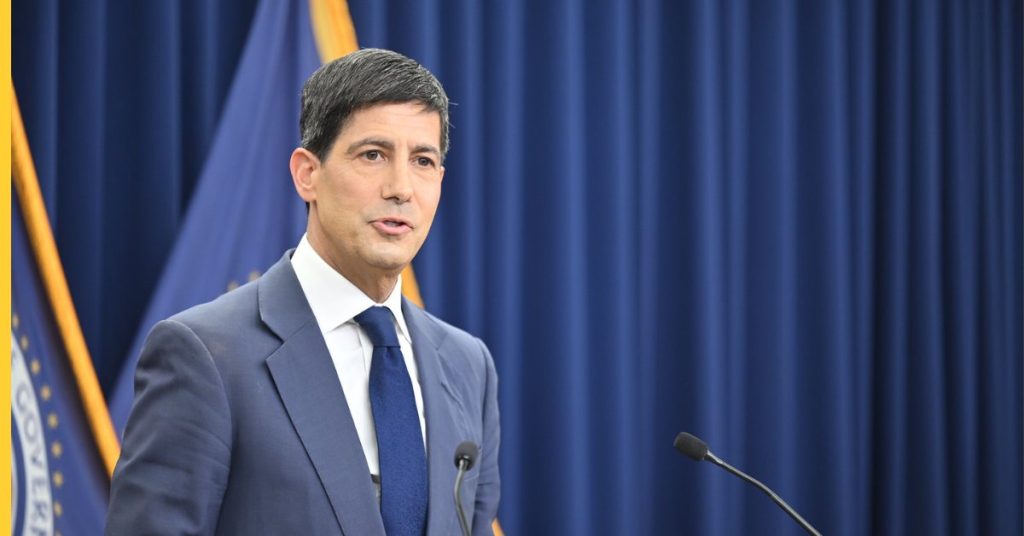
- How Kevin Warsh, the current Fed Chair, fits in
The world trusts and invests in the US economy largely because of the concept of “independence within government,” a system that aims to separate monetary policy from politics. This separation is designed to prevent the Federal Reserve System Board (the Fed) from implementing monetary policy to help or harm a political party.
The system is built so that monetary policy decisions are what’s best for the economy, not a political party. However, this is not always the case. Fed governors and Reserve Bank presidents disagree constantly about what is best for the economy, and their appointment backgrounds correlate with those disagreements.
How the system works
The President nominates members of the Board of Governors and the Chair, and the US Senate confirms them. Governors serve one 14-year term, staggered so that one expires every two years. The Chair serves a four-year term and may be reappointed indefinitely.
The Federal Open Market Committee (FOMC) makes interest rate decisions and has 12 voting members:
- The seven Fed governors
- The president of the New York Fed
- Four of the remaining 11 regional Reserve Bank presidents on a rotating basis
Each regional bank’s board of directors chooses those presidents, subject to approval by the Board of Governors. That means five of the 12 votes on rate decisions sit outside the presidential appointment process.
How the Chair could influence rate decisions
The system is not perfect, and a politically-driven Chair could potentially corrupt the Fed to favor one political party. Here’s how:
- When the Fed meets, several alternatives are presented. The Chair states which one he recommends, and the vote is on his recommendation, not all of the proposals. So he sets the default, and moving away from it requires other members to actively organize against him. Controlling what gets voted on is more powerful than controlling votes.
- The Chair picks which meeting he recommends acting at. Thus, he can recommend a rate cut at the meeting that helps his party or recommend waiting at the ones that do not help his party.
- The Chair can move borrowing costs by talking. What he signals in testimony, press conferences, and speeches about future policy can shift mortgage rates and Treasury yields the same day.
Arthur Burns chaired the Fed under Nixon. White House tapes and Burns’ published diaries record sustained pressure to keep money loose before the 1972 election. Policy stayed loose and Nixon won 49 states, but inflation ran through the rest of the decade. Burns broke no laws and never lost a formal FOMC vote.
In contrast, Fed Chair Paul Volcker, appointed by President Jimmy Carter, raised rates into a recession. Volcker was, in effect, instituting policy that damaged the president who hired him, and the economy was a primary reason Carter lost the 1980 election. But that is how the system is designed to work: the Fed makes the decision that is best for the economy, not for the person in power.
So the answer to “What’s the Fed decision in September?” hinges on whether Warsh is making decisions for what’s best for the economy or what’s best for President Donald Trump in the midterm elections.
How Kevin Warsh fits in
Warsh is a Republican. He donated to George W. Bush’s campaigns in 2000 and 2004 and was appointed to the Federal Reserve Board of Governors by President Bush in 2006. Trump later appointed him as Fed Chair in 2026. He was appointed by Republican presidents. This is routine. What’s different is that Trump often prioritizes political loyalty over ability in his appointments, and Warsh’s position on interest rates appears to change depending on which party is in the White House.
Under President Barack Obama, he wanted rates higher. He objected to the Fed’s low-rate policies and warned repeatedly that inflation was about to take off. It didn’t. Inflation stayed very low for years. In 2010, he criticized but voted for QE2, the Fed’s second big bond-buying program, saying more stimulus would cause inflation later.
Under Trump, he wants rates lower. He had argued that AI will make the economy more productive, which will keep prices down, a weak argument that he appeared to qualify at Jackson Hole, when he said the Fed’s current work on AI has no bearing on near-term policy decisions.
Critics point to the timing:
- Under Obama, he pushed for tighter money at the weakest point of the recovery, exactly when most economists recommended the opposite.
- Under Trump, before his confirmation, he pushed for easier money when unemployment was low, and inflation was near the Fed’s target.
Paul Krugman, an American economist, author, and Nobel laureate, put it simply: Warsh hits the brakes when Democrats are in power and the gas when Republicans are.
Elizabeth Warren, the senator from Massachusetts and a former Harvard Law professor, was blunter, calling him a “sock puppet” and saying his views looked shaped to please Trump.
Warsh himself said that presidents and members of Congress publicly stating their views to cut interest rates does not really threaten the Fed’s independence.
The New York Times reported that Warsh is considering reducing the number of FOMC meetings per year. Fewer meetings means fewer decision points and more control over when the committee acts.
Serious economists have made the Warsh-Trump partisanship argument publicly.
What does all of this mean?
Seven weeks before an election, three things can move: stock prices, short-term borrowing costs and headlines. A rate cut moves all three the right way for Trump and the Republicans. Equities can rally, credit card and adjustable-rate borrowing eases within a billing cycle or two, and the president gets to campaign on “we lowered your rates.”
Nothing in the real economy — jobs, wages, prices — responds in seven weeks. Policy lags run six to 18 months. So the political payoff of a cut is psychological and financial, but not economic.
What’s the Fed decision in September? It’s what Trump is asking for, and Trump wants cuts. Trump is publicly demanding the Fed lower the federal funds rate ahead of the Sept. 15-16 meeting.
- On July 27, Trump directly demanded a cut, saying US rates should be the lowest in the world.
- On August 19, he said he was frustrated the Fed isn’t cutting and that solid economic data shouldn’t stop the central bank from easing.
- He accused Fed officials of political motives but not Warsh. He said Warsh is doing a “great job” and that the problem is “a political board.”
- After Jackson Hole, Trump said US borrowing costs should be lower than other countries.
- He has tied the demand for cuts to housing, arguing lower rates would make mortgages affordable, and to the federal debt, arguing lower rates cut interest costs.
A cut would be difficult to justify on economic grounds, while a hike would run directly against what Trump is demanding. Kalshi traders slightly favor a 25bps hike (53%), with “Fed maintains rate” sitting at 47% as of Sept. 4.
The FOMC is scheduled to announce its decision at 2 p.m. EDT on Sept. 16. I predict that the Fed maintains the current rate in that vote.
Way Yuhl is a cultural theorist and geopolitical analyst. The views and opinions expressed in this article are his own. You can read his weekly analysis and predictions at his Substack, CulturalPerspective.