
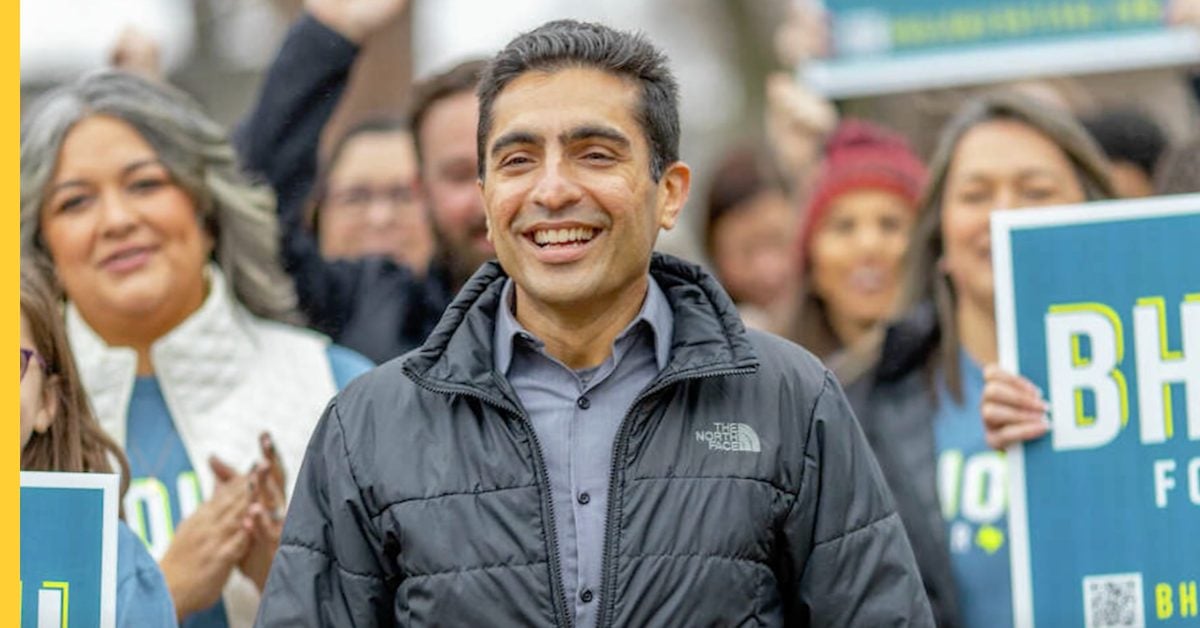
Democratic Texas state Rep. Salman Bhojani has submitted legislation to impose state-specific regulations on prediction markets.
And while the bill proposes various restrictions and provisions to tighten regulation around prediction markets in Texas, it’s what’s absent from the legislation that could suggest a more liberal attitude towards the sector.
Many states and state gambling regulators have taken an aggressively oppositional stance towards sports contracts, but House Bill 598 (HB 598) does not seek to prohibit them, or indeed political and cultural markets.
Instead, it focuses on blocking controversial markets that could be described as contrary to the public interest, such as those pertaining to criminal proceedings, death, terrorism, war, disease, immigration enforcement and natural disasters.
Polymarket’s controversial contracts highlight regulatory divide
Platforms such as Polymarket have become strongly associated with the hosting of controversial markets.
According to Commodity Futures Trading Commission (CFTC) rules, federally registered exchanges are prohibited from listing contracts involving war, terrorism, assassination and unlawful activities. However, Polymarket operates two platforms with distinct legal profiles.
One is regulated in the US, while the other is managed offshore and is ostensibly for the use of traders outside of the US.
Polymarket is required to block US users from accessing its offshore site, but at least one high-profile alleged insider trading case involved a US citizen using a virtual private network (VPN) to access the platform.
The Texas bill would explicitly prohibit operators from knowingly helping users circumvent geolocation restrictions through VPNs or proxy servers.
Texas bill would set minimum trading age at 21
Most forms of gambling are illegal in Texas, including sports betting.
But while other states with a regulated gambling market have moved to ban sports contracts, the additional measures in this bill are more akin to an attempt to bring the sector in line with common state gambling rules.
For instance, the bill proposes an age requirement of 21 or older, a threshold common in most US jurisdictions with regulated gambling.
In contrast, the vast majority of prediction markets allow trading for users aged 18 and up, with the notable exception of Novig, which introduced its own 21+ rule as part of a wider set of ‘Responsible Trading’ policies.
The bill would also restrict advertising aimed at people under 21 and require operators to display age warnings in promotional materials. Violations could carry civil penalties of up to $10,000 each, rising to $25,000 for violations of the age requirements.
Texas geofencing proposal clashes with CFTC guidance
If the bill were to pass, operators would also have to use “commercially reasonable measures” to determine whether a user is in Texas and prevent them from accessing prohibited contracts.
The proposed legislation becomes more controversial than it may seem on its face, and the “commercially reasonable” caveat could become a point of debate.
In legal battles with states that have attempted to outlaw prediction markets, operators like Kalshi have long argued that geo-fencing would be financially ruinous, stating in multiple cases that the immediate cost would constitute “irreparable harm.”
Despite arguing that it would be unworkable, Kalshi has since had to implement geofencing in Nevada, Washington and Michigan, with more states potentially in the pipeline.
But Kalshi and other federally regulated exchanges facing state restrictions have been placed in a bind by the CFTC’s recent guidance, which says domestic geographic restrictions can violate federal impartial access requirements under the Commodity Exchange Act.
Texas’ attitude to prediction markets post-midterms
Regulation like this would look like liberalization in the gambling ecosystem, though in this case it’s more complicated.
Section 623.002(c) of the bill states: “This chapter does not authorize, legalize, or license gambling, sports wagering, or other conduct prohibited by Chapter 47, Penal Code, or other laws of this state.”
This leaves open the question of whether sports contracts constitute gambling under Texas law.
To date, however, Texas has not taken legal action against prediction markets and has been among the few states absent from bipartisan multistate efforts. Those include a 34-attorney general amicus brief in the Third Circuit and a letter signed by 44 state attorneys general arguing that states should retain authority over sports event contracts.
The midterm election results in Texas saw Democrats take the offices of governor and lieutenant governor, and one immediate result of that has been a fresh attempt to legalize sports betting and casinos in Texas.
A joint resolution filed by state Rep. Charlie Geren reflects the feeling that opening up that market could be a more realistic prospect following the changes in state leadership.
On the question of prediction markets, however, it’s not yet clear how the state’s attitude will evolve.
Clearly there is a strong consumer protection vein running through Bhojani’s proposals, but it remains to be seen whether increased Democratic power will translate into a tougher stance on prediction markets.