
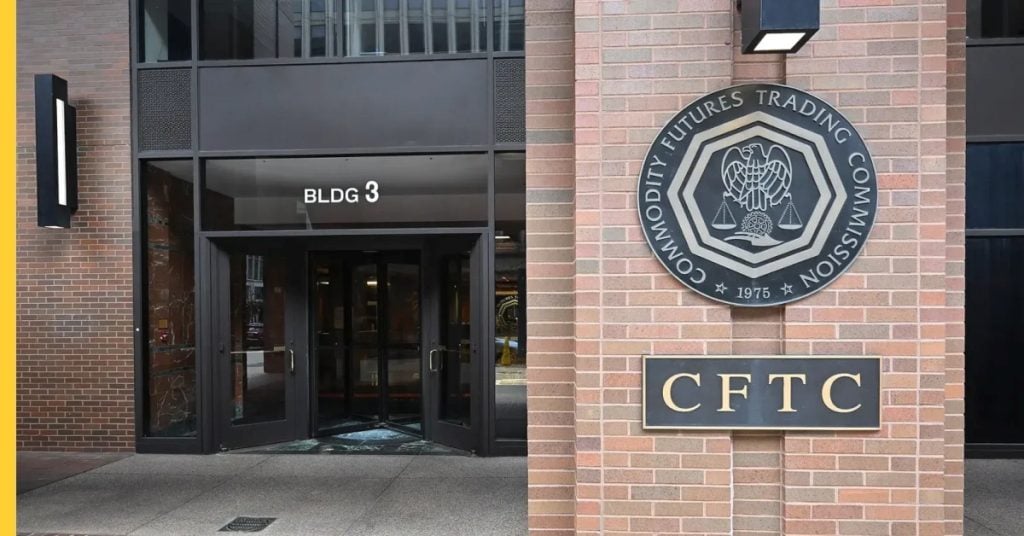
The Commodity Futures Trading Commission (CFTC) has opened a faster route for regulated US exchanges to convert certain index futures into true perpetual contracts.
The agency’s Division of Market Oversight announced the no-action relief Monday. It applies to existing perpetual-style futures connected to broad-based security indexes. Those contracts can now have their expiration dates removed, provided exchanges meet several conditions.
That distinction changes how the products operate. True perpetual futures have no fixed expiration date. Instead, periodic funding payments help keep their prices aligned with the underlying market. Some US exchanges had worked around regulatory uncertainty by listing similar products with unusually distant expiration dates, including contracts running as long as 25 years.
In June, the CFTC granted Coinbase and Bitnomial no-action relief to remove expiration dates from existing crypto perpetual-style futures, effectively converting them into true perpetuals. Kraken later launched the Bitnomial-listed contracts for US customers.
Coinbase Derivatives requested similar relief for broad-based stock-index futures on Oct. 1. The CFTC issued Staff Letter 26-29 on Oct. 3 and announced it Oct. 5.
The relief extends beyond Coinbase, which launched its prediction markets platform earlier this year, to other designated contract markets, or DCMs, that meet its conditions.
Kalshi also pushes deeper into perpetual futures
Kalshi, itself a CFTC-regulated DCM, has been pushing deeper into perpetual futures since launching a Bitcoin contract in May. Kalshi subsequently expanded into other cryptocurrencies and metals before moving into broad-based stock indexes.
In August, the exchange submitted its US500 perps contract, which tracks an index of 500 large US companies, for agency review. The CFTC approved it on Oct. 2, and Kalshi launched the contract Tuesday. The exchange followed on Oct. 5 by self-certifying US500T, a second perpetual tied to a variant of the same 500-company index.
The new letter creates a shorter route for exchanges that already have perpetual-style broad-based index futures with expiration dates. It does not broadly authorize other types of perpetual contracts and does not apply to Kalshi’s election, sports or other event contracts.
For operators, the change narrows a structural gap between US-listed products and offshore markets. The CFTC said regulatory uncertainty contributed to the shift, noting that “the market for perpetual futures contracts largely developed outside of the United States.”
Faster process comes with customer protections
Exchanges must seek feedback from market participants with open positions about potential adverse effects and provide at least five calendar days’ notice before making a change. Customers must also have an opportunity to close their positions under the existing terms.
Exchanges must provide appropriate risk disclosures and cannot change other material contract terms through the process. The CFTC said altering contracts with open interest can affect prices and potentially create gains or losses solely because the contract terms changed.
The relief allows qualifying amendments to take effect without waiting through the normal 10-business-day period. Exchanges still must file the changes with the CFTC and certify that they have met the letter’s conditions.
The conversion window is brief. The CFTC’s no-action relief expires Oct. 20, after which exchanges would need another regulatory basis for similar changes.
The staff no-action letter consequently provides a temporary conversion mechanism rather than a blanket rule for perpetual products. It also marks another step toward bringing financial products associated with offshore derivatives trading onto federally regulated US exchanges.