
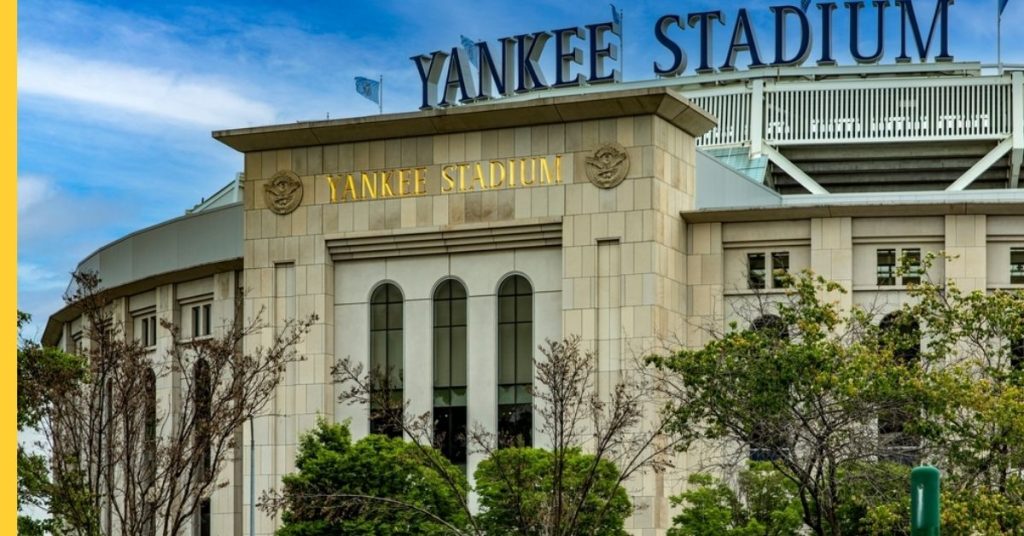
Polymarket has added the New York Yankees to its growing sports partnership portfolio, extending prediction markets further into MLB.
The company became an Official Prediction Market Partner of the Yankees under an agreement announced Thursday, August 6. Polymarket branding will appear throughout Yankee Stadium for the remainder of the 2026 season.
The deal includes LED displays before and during games as well as rotating home-plate signage during local broadcasts on YES Network and Prime Video. The agreement also covers premium hospitality and several fan experiences like Kids Run the Bases, lineup-card delivery opportunities and an outfield catch for children.
The Yankees deal moves prediction markets another step inside the traditional sports sponsorship model. Exchanges are increasingly appearing where regulated sportsbooks established themselves following expanded US sports betting legalization.
Polymarket already has a much larger relationship with baseball. MLB named it the league’s Official Prediction Market Exchange in March.
That agreement gives Polymarket access to MLB marks, logos and official league data distributed through Sportradar. It also provides exposure across MLB’s digital properties and league events.
Polymarket safeguards in MLB deal
Polymarket’s wider MLB deal includes specific integrity safeguards. Polymarket agreed to restrict markets involving individual pitches, managerial decisions and umpire performance because the MLB considers those higher risk for manipulation.
The Yankees are Polymarket’s second clearly established individual US team partnership after the New York Rangers.
Polymarket has built a fairly broad portfolio of sports partnerships across the US and internationally. Beyond the MLB agreements, Polymarket partners with the NHL, UFC, Zuffa Boxing, MLS, Leagues Cup, LaLiga, Serie A, the ATP Tour and ATP Challenger Tour.
That distinction matters as prediction exchanges move closer to teams, stadiums and fans. Their expansion gives leagues another commercial partner while creating another market requiring integrity monitoring.
Prediction markets find new ground on the sports field
The Yankees are not the first New York club to move directly into the sector. The Mets signed a multi-year agreement with Novig last week. That deal made Novig the Mets’ exclusive official prediction market partner. It includes Citi Field signage, broadcast branding, in-game integrations and digital content.
Baseball’s stance on prediction markets has changed considerably during the past year. Commissioner Rob Manfred said in February that owners had been briefed on how the exchanges operate.
Manfred also highlighted one attraction of the model: federal oversight through the Commodity Futures Trading Commission (CFTC). Sportsbooks remain primarily regulated through individual states. He said a uniform federal structure could provide consistency across the country. MLB subsequently signed an information-sharing agreement with the CFTC alongside its Polymarket partnership.
Sports integrity central to MLB prediction market involvement
MLB has nevertheless remained focused on betting-related integrity risks. That concern predates its prediction market agreements.
In November 2025, MLB and major sportsbook partners capped pitch-level wagers at $200 and removed those markets from parlays. Operators covered by the agreement represented more than 98% of the US regulated sports betting market.
The league said single-pitch markets carried heightened risks because one player can directly determine their outcomes. The CFTC has included similar market restrictions in its proposed rulemaking related to sports event contracts.
As those rules get sorted, the Yankees agreement puts Polymarket branding inside one of baseball’s most prominent stadiums. Combined with the Mets-Novig deal, it’s clear that operators are willing to invest in prime sports advertising deals even amid legal and regulatory uncertainty.