
Kalshi’s agreement to power a prediction market app for a small Oklahoma tribe is being challenged in a tribal court lawsuit, with plaintiffs claiming the deal was never authorized.
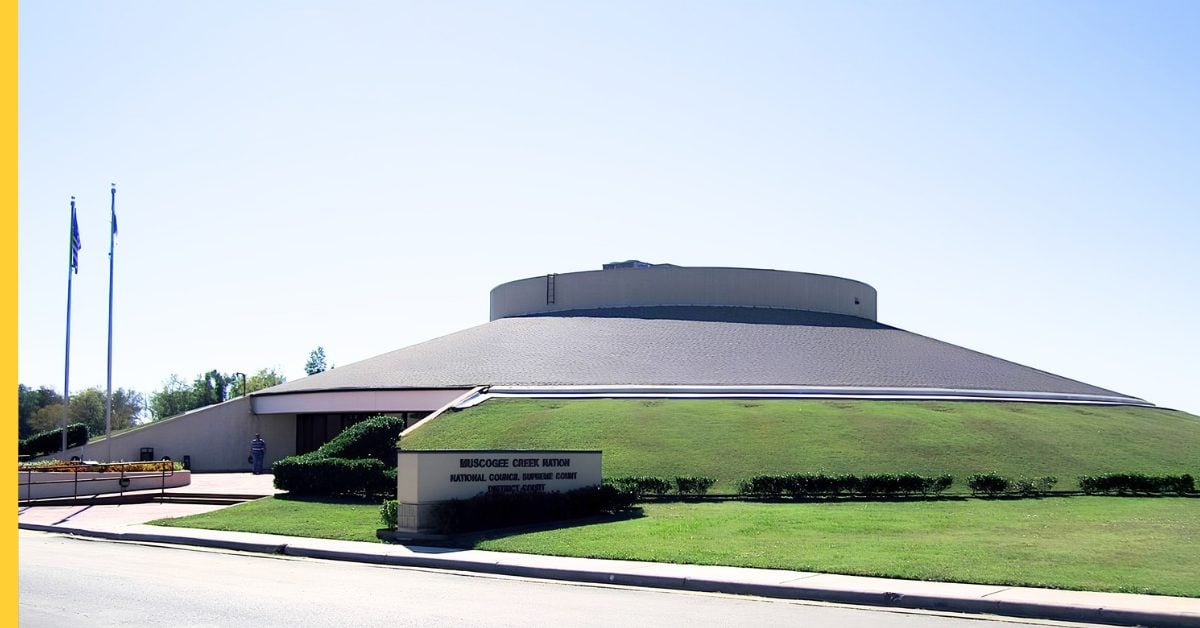
The Alabama-Quassarte Tribal Town and Samuel Marshall Jr., one of two men claiming to be its chief, filed suit Oct. 30 in Muscogee (Creek) Nation District Court. They want the court to invalidate the agreement behind PokkeTrades, a trading platform Kalshi announced in October.
The complaint, filed in Muscogee (Creek) Nation District Court, names Kalshi, CEO Tarek Mansour, Wilson Yargee and Michael Stopp as defendants. Specifically, Marshall claims Yargee improperly represented himself as tribal chief when negotiating the arrangement.
Kalshi announced the partnership Oct. 7, identifying Yargee as chief and Stopp as vice president of economic development. At the time, PokkeTrades was scheduled to launch in November, using Kalshi’s federally regulated exchange infrastructure.
However, the plaintiffs maintain that the tribe’s governing committee neither approved nor ratified the agreement. They want an injunction preventing the venture from proceeding, damages and corrections to allegedly false representations about tribal leadership.
Kalshi disputes the allegations. Spokesperson Jacki McGavick told Oklahoma Voice that the company stands by the agreement, maintaining that the tribe’s governing council approved it.
Stopp, speaking on behalf of himself and Yargee, told the outlet they expect the lawsuit to be dismissed, as previous cases brought by Marshall’s administration have been.
Leadership dispute predates Kalshi partnership
According to the complaint, Yargee was removed as chief in 2021 but continued conducting business under that title. However, Yargee disputes the validity of his removal and maintains that he was reelected in 2025.
The leadership dispute predates Kalshi’s involvement. For example, a 2024 Oklahoma state court case concerning tribal bank accounts resulted in Yargee’s removal as an authorized signatory, although the judge did not rule on who was the legitimate chief. The Bureau of Indian Affairs currently identifies Marshall and Yargee as competing claimants to the tribe’s leadership.
A previous lawsuit between the rival factions in Muscogee (Creek) Nation District Court was dismissed in 2022 for lack of jurisdiction, without resolving the leadership dispute.
Marshall, who issued a statement opposing the agreement just days after Kalshi’s announcement, also invokes an 1825 Creek Nation prohibition against “bad talk” concerning chiefs, seeking recognition of a civil claim over alleged misrepresentations.
Kalshi’s tribal partnerships face growing opposition
The lawsuit complicates Kalshi’s recent effort to establish partnerships with Native American tribes.
Its first tribal agreement came Sept. 18 with Louisiana’s Tunica-Biloxi Tribe, which announced SaltTrade Derivatives. In establishing the partnership, the tribe reversed course on its previous opposition to Kalshi’s sports-related markets.
Kalshi also announced partnerships with three California tribes Oct. 7: the Greenville Rancheria, Alturas Indian Rancheria and Kletsel Dehe Wintun Nation. Each would control its customer-facing application while using Kalshi’s exchange infrastructure.
The partnerships have attracted criticism from tribal gaming organizations that oppose Kalshi’s sports contracts.
The California Nations Indian Gaming Association condemned the October agreements, arguing that tribal participation doesn’t resolve alleged violations of the Indian Gaming Regulatory Act (IGRA).
On Oct. 8, a coalition of 145 tribes and tribal organizations submitted a Supreme Court brief arguing that Kalshi’s sports contracts violate tribal gaming law.
Oklahoma Indian Gaming Association Chairman Matthew Morgan separately warned that such platforms undermine tribal-state gaming compacts and threaten revenue supporting tribal services.
The dispute follows a Sept. 16 Ninth Circuit ruling involving Blue Lake Rancheria and Chicken Ranch Rancheria. The appeals court found that the tribes were likely to succeed in arguing Kalshi’s sports contracts constitute Class III gaming on their lands under IGRA.
On Nov. 4, a federal judge granted the tribes a preliminary injunction, barring Kalshi from offering sports contracts on their lands.
Kalshi maintains that its contracts fall under federal commodities regulation. The Oklahoma lawsuit, however, presents a different question: whether the people who negotiated one of Kalshi’s newest tribal partnerships had authority to do so.