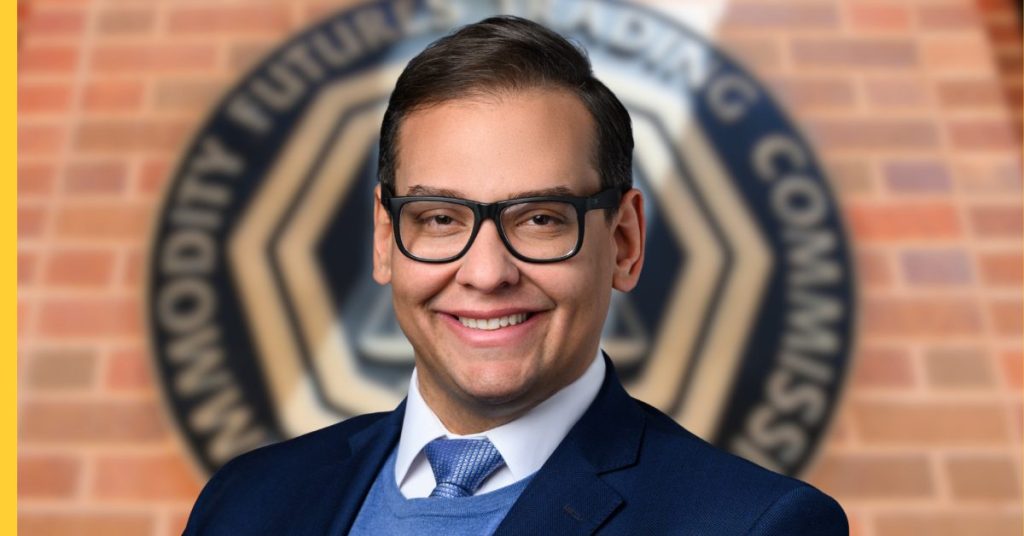
The Commodity Futures Trading Commission (CFTC) has ordered George Santos to pay more than $35,000 after the disgraced former US Congressman was found to have engaged in manipulative activity in an event contract.
Detailing the charge, the CFTC said Santos traded on a Kalshi event contract titled “Who will attend the State of the Union?”, an annual message delivered by the sitting US President. More specifically, Santos was found to have traded on whether he would attend or not.
The regulator noted that Santos made false and misleading statements on social media to manipulate the market for the contract. The CFTC said Santos made a series of “material misrepresentations and omissions” about whether he would attend, which in turn led to the contract prices moving in a direction favorable to Santos.
Santos subsequently failed to attend, allowing him to profit from positions that benefited from his absence. This, the regulator ruled, was in violation of the Commodity Exchange Act and its own regulations.
As such, Santos was ordered to pay a $17,500 civil monetary penalty, as well as disgorge a total of $17,569.98 in illicit gains. This placed the total amount owed at $35,069.98.
Santos will also be prohibited from engaging in trading, directly or indirectly, with any CFTC-registered entity for a period of three years.
Santos represented New York in the US House of Representatives after being elected as a Republican in 2022. However, he was expelled from Congress in 2023 following an ethics investigation. He later pleaded guilty to federal wire fraud and aggravated identity theft charges in an unrelated case.
Kalshi clamping down on insider trading
Since reports of Santos’ activity came to light earlier this year, Kalshi has taken a series of steps to prevent similar insider trading occurring again in the future.
In June, Kalshi launched a new risk-scoring system, employment verification requirements and enhanced whistleblower tools. The operator now assigns markets a risk score based on various factors including the likelihood of insider access to sensitive information and the potential for manipulation.
Traders participating in any higher-risk markets may be required to verify their employment status or disclose affiliations that could provide them with access to non-public information.
Shortly after, Kalshi also linked up with StarCompliance to launch a new monitoring product. The partnership purports to be the source of the financial industry’s first “enterprise-grade compliance solution” for insider trading on prediction markets.