
The National Council of Legislators from Gaming States (NCLGS) has entered the national fight over sports prediction markets, backing New Jersey’s bid for Supreme Court review in its dispute with Kalshi.
NCLGS filed an amicus brief supporting New Jersey officials’ petition for review by the high court of an April Third Circuit ruling. The group argues that federal commodities law should not displace states’ traditional authority over gambling. It says the appellate decision could unsettle state betting laws, tribal gaming compacts and regulatory systems built after the Supreme Court’s 2018 Murphy v. NCAA decision.
The brief focuses heavily on the practical reach of the Third Circuit ruling. NCLGS says states including Florida, Connecticut and Washington have negotiated tribal arrangements tied to sports wagering rights. It argues that nationwide sports contracts could weaken exclusivity provisions and force states to revisit existing gaming laws.
Appeals courts split on Kalshi sports contracts
The underlying case began after New Jersey ordered Kalshi to stop offering sports event contracts in the state. A federal district court subsequently blocked enforcement, and on April 6, a divided Third Circuit affirmed that preliminary injunction. It found Kalshi had a reasonable chance of proving the Commodity Exchange Act (CEA) preempts New Jersey gambling law.
The majority treated the sports contracts as swaps traded on a designated contract market regulated by the Commodity Futures Trading Commission (CFTC).
That position now conflicts with the Ninth Circuit. On Aug. 28, the Ninth Circuit ruled in KalshiEx v. Assad that Kalshi had not shown federal law likely preempted Nevada’s gaming rules. It concluded the sports contracts were not swaps under the CEA and upheld Nevada’s ability to enforce its laws at the preliminary stage.
NCLGS increases efforts to corral prediction markets
NCLGS had already taken a formal position on prediction markets before joining the case. Its executive committee unanimously approved a July resolution opposing markets operating outside state and tribal gaming frameworks.
The resolution asked Congress to clarify the legal status of prediction markets. It also urged the CFTC to stop treating sports and political contracts as financial instruments exempt from gaming regulation. Member states were encouraged to assert jurisdiction where appropriate.
NCLGS also made prediction markets a major subject at its July meeting in San Diego. Lawmakers, regulators and industry figures debated the federal-state jurisdictional dispute and possible legislative responses.
The organization’s filing carries no binding legal authority; its relevance comes from the constituency it represents: state lawmakers, including members who oversee gaming legislation.
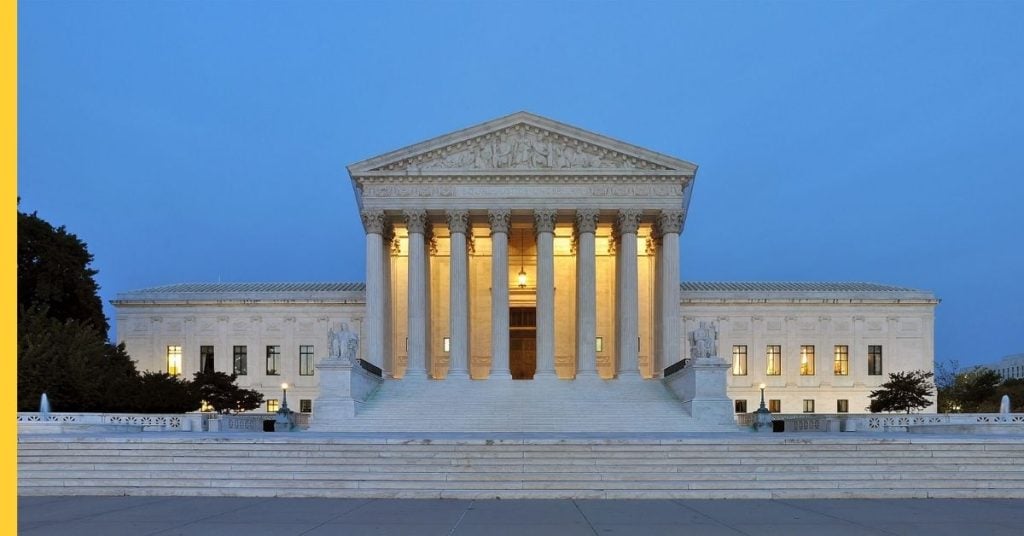
That gives the brief added context as the Supreme Court considers whether to review a dispute that now involves conflicting appellate rulings.
New Jersey filed its petition on Sept. 2. The Supreme Court on Sept. 22 granted Kalshi additional time to respond, extending its deadline to Nov. 9. The justices have not yet decided whether to hear the case.