
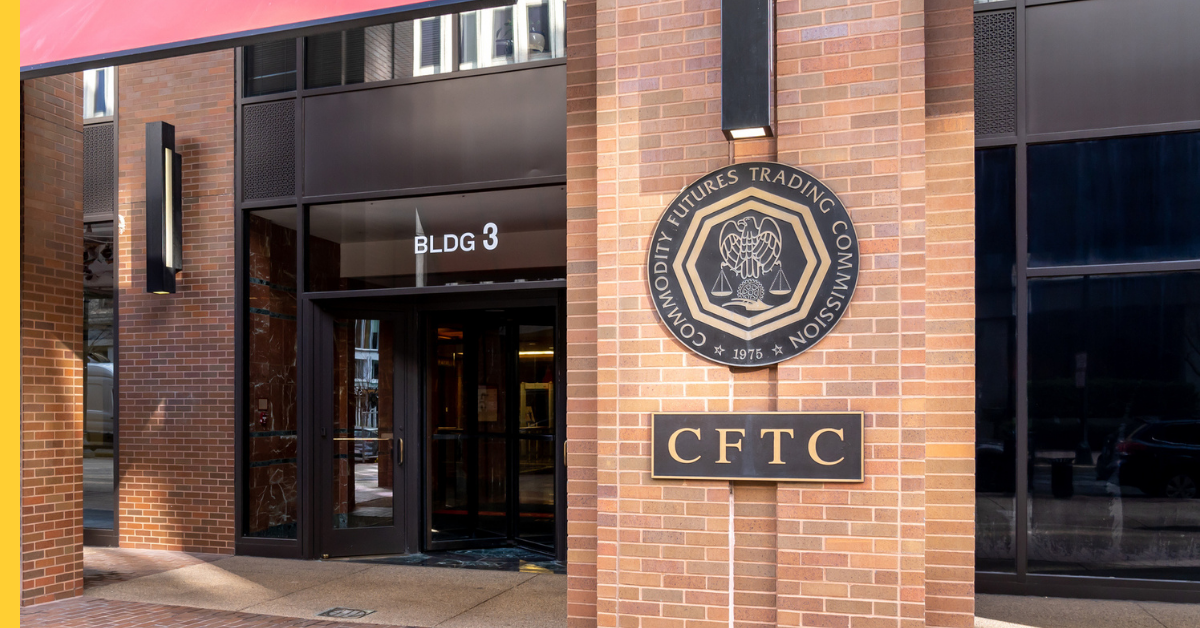
The Commodity Futures Trading Commission’s (CFTC) new consultation on prediction markets opened on 16 March, and the first submissions show how wide the debate has already become.
The agency’s public docket, created under proposed rule 91 FR 12516, lists comments from Senator Jack Reed and Senator John Hickenlooper, consultant Maurice Bransfield and lawyer Stevie Cline, among others, with the comment period scheduled to run until 30 April.
Reed and Hickenlooper, who presented their opinion on 5 March, used their filing to press the CFTC to prohibit event contracts tied to US military operations and to examine whether insider trading risks are already present in those markets.
The senators wrote: “These contracts are so dangerous to the national security of the United States and so offensive to US values that they far outweigh any legitimate risk-management purpose. Traders with inside information that specific geopolitical events will occur or who can directly influence such events can easily buy event contracts.”
Their submission argues that contracts linked to military action raise national security concerns and create a structure in which traders could profit from highly sensitive geopolitical events before the broader public has access to the same information.
Calls to make data more accessible
Meanwhile, Bransfield’s comment focuses on market data rather than contract bans.
He urged the commission to require prediction market exchanges to publish trading data in machine-readable formats and to preserve at least 24 months of publicly accessible historical records.
Bransfield asserted: “The data generated by these markets belongs in the public domain in a form that the public can actually use. Requiring machine-readable format and historical data availability is a modest, proportionate, and long overdue transparency measure.”
The thrust of that recommendation is transparency: Bransfield argues that limited access, including short retention periods and non-searchable formats, weakens oversight and makes independent research more difficult.
Autonomous systems and AI controls become part of debate
Elsewhere, Cline’s filing centres on the way autonomous systems could distort these markets. She asked the commission to adapt its framework for AI-driven trading, including an “upstream scienter” model that would assign responsibility at the design, training and deployment stages.
Her letter also calls for AI-specific surveillance tools and a safe harbour for firms that can show strong governance and controls.
The salient point is that existing anti-manipulation rules were built around human actors, not software that can learn, adapt and trade at scale.
Cline stated: “Many event contracts, particularly those referencing niche political, scientific, or cultural events, have relatively thin order books. AI systems can exploit thin liquidity to move prices with minimal capital, creating distorted probability signals that may influence real-world decision-making or related markets.”
A gambler’s view
Another comment came from a self-professed “investor and gambler”. The anonymous individual, leveraging a background in both finance and gambling, argued that prediction markets are clearly “bets” rather than “investments.”
They advocated for strict regulation comparable to sportsbooks, specifically urging bans on markets involving “negative actions” on lives, easily manipulated individual behaviours (such as Elon Musk’s tweets), or sensitive judicial and economic decisions.
“I am unsure of exactly how the government defines gambling vs investment, but I would find it funny for anyone to try to argue the following contracts on Polymarket are ‘investments’,” the commenter wrote, before listing markets such as who the next James Bond actor will be and who will win Big Brother Brazil 2026.
The comment concluded emphatically: “Prediction Markets are gambling.”