
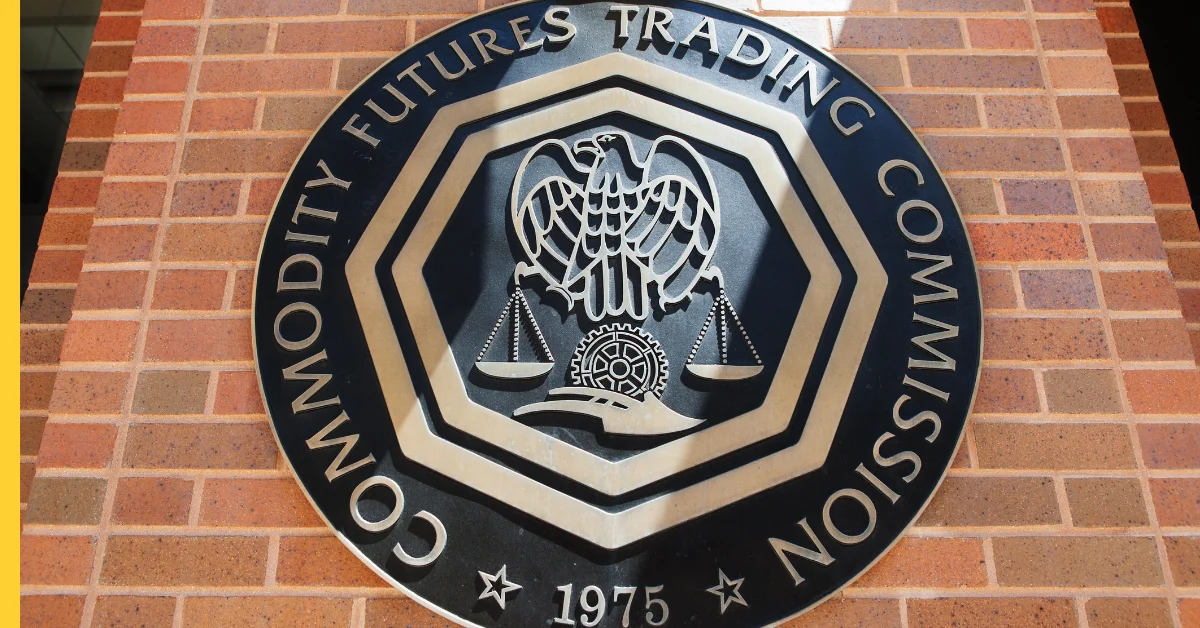
The CFTC has officially granted “no-action relief” to the Phantom crypto wallet, in a move that signals a pivot away from years of jurisdictional friction.
This regulatory greenlight, issued by the CFTC’s Market Participants Division, clarifies that the self-custodial software provider will not be required to register as an introducing broker to offer direct access to regulated derivatives and event-contract markets on its platform. The decision could fundamentally reshape the digital asset landscape in the US.
By allowing Phantom to integrate market data and trade execution for entities like Kalshi directly into its interface, the commission has effectively validated the “software-only” defence that non-custodial developers have championed for nearly a decade.
This specific relief for Phantom is far from an isolated regulatory event.
Instead, while not explicitly acknowledged, it seems to serve as the first major implementation of a broader “Joint Harmonisation Initiative” between the SEC and the CFTC, colloquially known in Washington as “Project Crypto.”
The timing of the CFTC’s letter is precisely calibrated to follow the SEC’s comprehensive guidance issued earlier this month, which formally classified major digital assets such as Ether, Solana, and XRP as non-security digital commodities.
The SEC removed “unregistered securities” from the assets in these wallets, effectively passing responsibility to the CFTC.
This is a joint effort so that developers are not caught in a position to adhere to one set of rules and inadvertently break another. There is now one set of rules that is shared by all in this industry.
SEC-CFTC collaboration strengthens
The correlation between these two actions emphasises a strategic pivot toward a disclosure-based regime championed by SEC Chair Paul Atkins and CFTC Chair Michael Selig.
Under the Joint Harmonisation Initiative, the agencies have moved away from “regulation by enforcement” in favour of establishing clear “guardrails” for the burgeoning “super-app” model of finance.
The Phantom relief specifically mandates rigorous risk disclosures and prohibits the provision of personalised investment advice, mirroring the transparency requirements found in the SEC’s new guidance for digital commodity platforms.
This approach also keeps the technology decentralised and non-custodial, but it also maintains high standards of consumer protection and market integrity at the interface with the user.
Furthermore, the addition of regulated prediction markets to traditional crypto wallets also shows that the space for event contracts is becoming more mature.
As the CFTC makes these regulated prediction markets more easily accessible, it also works with the SEC to monitor the effect of high-volume event betting on the system, particularly when it comes to politics and geopolitical events.
By accepting the concept of self-custodial software as an exception, the US government has also shown how traditional financial regulations can be aligned with decentralised systems in order to create a more integrated and transparent global financial system.
Decision could give Polymarket a boost
The SEC’s recent classification of major tokens as digital commodities provides a critical ‘clean bill of health’ for Polymarket’s underlying infrastructure.
By explicitly removing the securities label from assets like Ether and USDC, the agency has effectively sanitised the crypto-native rails that Polymarket uses for collateral and settlement, eliminating the risk of “unregistered securities” charges that previously loomed over the platform.
Furthermore, the Joint Harmonisation Initiative establishes a clear jurisdictional boundary, ensuring that most event contracts fall under the CFTC’s oversight rather than the SEC’s.
This clarity is especially vital following Polymarket’s $112m acquisition of the CFTC-regulated exchange QCX.
With the SEC stepping back from non-financial event markets, Polymarket might now have a transparent regulatory pathway to integrate its high-liquidity, crypto-first model into a compliant US subsidiary, even as it continues to face state-level legal challenges.