
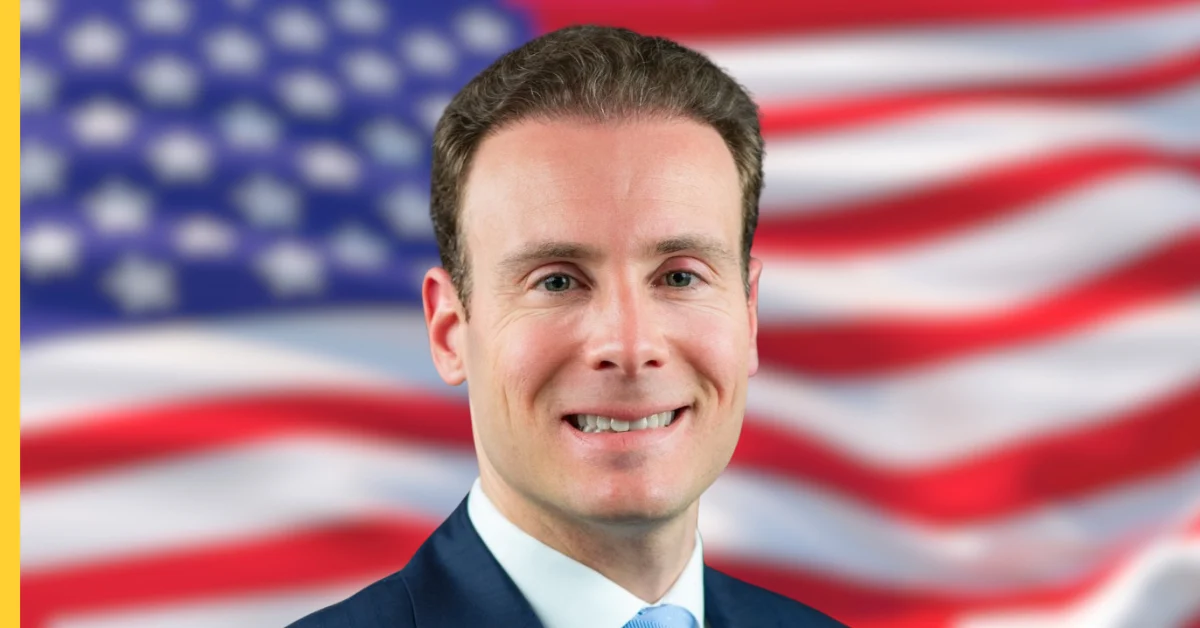
Commodity Futures Trading Commission (CFTC) Chair Michael Selig has taken to the Wall Street Journal to make the agency’s case in support of prediction markets directly.
In an op-ed, he defended the CFTC’s claim to oversee prediction markets and disclosed that the regulator has thrown its support behind Crypto.com in a federal appeals court dispute over who controls the space.
In the commentary, Selig stated that the CFTC has overseen prediction markets for decades.
He described these instruments as financial products that allow participants to hedge risk, aggregate information and test expectations about future outcomes.
“The CFTC will no longer sit idly by while overzealous state governments undermine the agency’s exclusive jurisdiction over these markets by seeking to establish statewide prohibitions on these exciting products.”
– CFTC Chair Michael Selig
According to Selig, the commission is filing a friend-of-the-court brief in the Ninth US Circuit Court of Appeals in support of Crypto.com, as it challenges state-level actions against prediction markets.
Selig, who did not specifically mention sports prediction markets in his op-ed, argued that a growing number of states are attempting to curtail the CFTC’s jurisdiction by pursuing litigation against exchanges offering event contracts.
He said nearly 50 active cases across the country present legal challenges, with many alleging that event contracts amount to gambling and should therefore fall under state gaming laws.
He characterised these efforts as encroachments on the agency’s exclusive authority under federal law.
The op-ed stated that several well-known exchanges registered with the CFTC, including Kalshi, Polymarket, Coinbase and Crypto.com, have been drawn into state-driven lawsuits.
CFTC to lay down the law
Selig contended that if states succeed in asserting control, participants could lose access to federally regulated event-contract markets.
He wrote that the commission will “no longer sit idly by while overzealous state governments undermine the agency’s exclusive jurisdiction” over products that fall within federal oversight.
Selig described event contracts as serving legitimate economic functions. He said businesses and individuals use them to hedge against event-driven risks, manage portfolio exposure and obtain information about anticipated developments.
Examples included farmers seeking protection against adverse temperature changes that could affect crops and small business owners hedging against possible tax increases or energy price spikes.
He maintained that these uses demonstrate the practical value of the products.
The commentary traced the development of event contracts from academic and experimental platforms into commercial markets.
In 1992, the CFTC granted relief to the Iowa Electronic Markets at the University of Iowa, allowing trading in contracts linked to outcomes such as presidential elections and corporate earnings.
Selig noted that HedgeStreet, now known as Nadex, later became the first marketplace to offer event-driven binary contracts to retail traders focused on indicators such as mortgage rates and petrol prices.
Event contracts under federal purview
Selig, a former chief counsel of the Security and Exchange Commission’s Crypto Task Force, asserted that under the Commodity Exchange Act, event contracts qualify as swaps.
He framed prediction contracts as derivatives that allow trades on where markets might head, without the need to hold the asset itself.
After the 2008 financial crash, Congress widened the CFTC’s remit, giving it sweeping oversight of contracts tied to commodities.
Selig noted that the legal definition of a commodity runs wide, covering most goods, services, rights and financial interests.
The only carveouts, he added, are onions, due to market manipulation, and film box-office receipts, the result of Hollywood lobbying efforts.
In his telling, lawmakers built that framework to absorb innovation, not choke it off. Futures, swaps and exchange-traded funds were all once unfamiliar products.
Each time, he wrote, Congress left the CFTC with expansive authority as markets shifted. A product’s novelty, he argued, is not a licence for courts to redraw the statute.
Selig also flagged the recent surge in prediction markets. In the run-up to the 2024 presidential election, he wrote, trading activity signalled expectations about the size of President Donald Trump’s victory.
He cited industry estimates indicating that the global number of users has quadrupled in the past two years to approximately 15 million. This, he said, was evidence of public demand.
Established regulations guide prediction markets
The op-ed also emphasised that event-contract markets operating under the CFTC’s jurisdiction are subject to regulatory safeguards.
Exchanges must conduct market surveillance to detect fraud and manipulation. Entities registered with the commission are also bound by Bank Secrecy Act requirements, including customer identification procedures and anti-money-laundering controls.
Selig rejected the characterisation of these exchanges as unregulated platforms, stating that they function as self-regulatory organisations subject to examination and supervision by CFTC staff.
Throughout the article, Selig framed the dispute as a conundrum over federal versus state authority.
He maintained that any erosion of the CFTC’s ability to regulate commodity derivatives would threaten market integrity and investor protections established by Congress.
He argued that the agency’s exclusive jurisdiction is inherent in the statutory framework and that attempts by states to override it risk fragmenting oversight of nationally traded financial instruments.
Selig concluded that the commission’s decision to support Crypto.com reflects a broader defence of its regulatory mandate.
He positioned the filing in the Ninth Circuit as part of an effort to preserve federal authority over event contracts, and to ensure continued access to regulated prediction markets for American participants.