
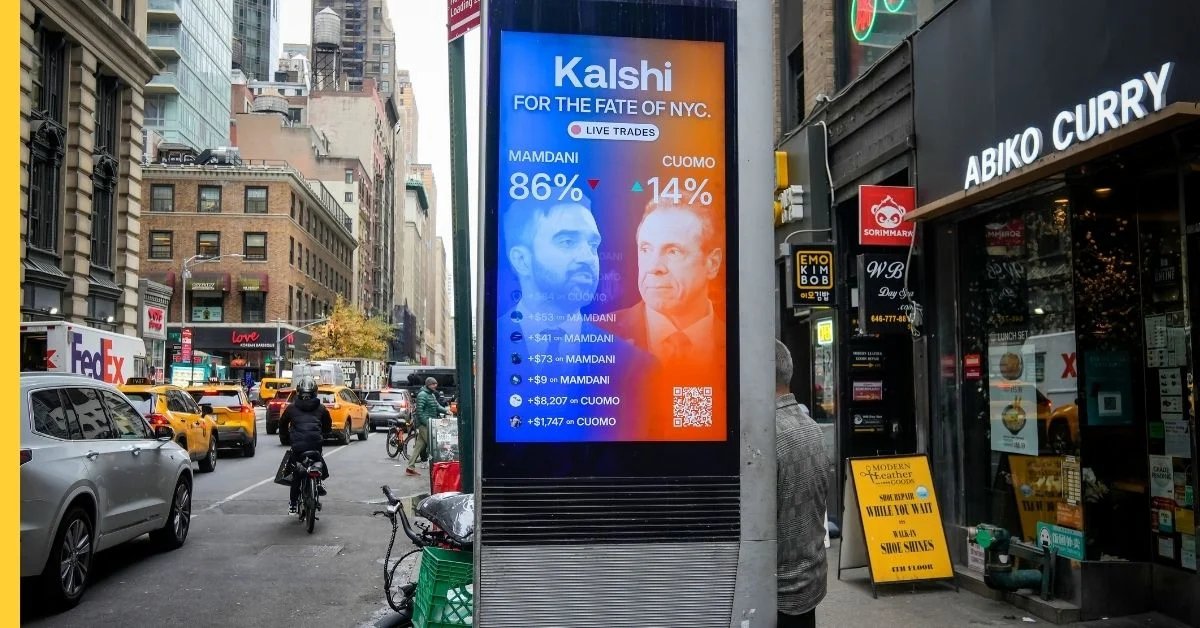
Kalshi has filed a federal lawsuit against Montana officials, in response to a cease-and-desist letter it argues disregards an existing agreement with the state.
The suit was filed in the US District Court for the District of Montana. In it, Kalshi seeks an injunction against Montana to prevent the application of its gambling statutes on the federally regulated exchange.
It follows a second cease-and-desist letter being issued to the company by the Gambling Control Division of Montana last week. The letter ordered Kalshi to cease offering event contracts to users in the state or else be subjected to legal measures.
This came despite an agreement reached between Kalshi and the state in April 2025, after Montana issued the business with an initial cease-and-desist. Kalshi asserts that the state had agreed to hold off enforcement while related litigation in Nevada worked through the courts.
In its complaint, Kalshi contends that agreement remains in force, and was improperly disregarded by Montana when it sent the second cease-and-desist.
Kalshi maintains federal regulation stance
The dispute centres on whether Montana can treat Kalshi’s event contracts as illegal gambling.
Kalshi argues those contracts fall under federal derivatives law, placing them exclusively within the jurisdiction of the Commodity Futures Trading Commission (CFTC).
The company maintains that its platform operates as a designated contract market regulated under the Commodity Exchange Act. This framework, it argues, grants the CFTC exclusive authority over derivatives trading, including event contracts tied to outcomes such as economic indicators or sports results.
The complaint states that federal law pre-empts any attempt by individual states to impose separate gambling restrictions on such activity.
That argument sits at the centre of several legal cases involving Kalshi and other prediction markets, with the CFTC broadly siding with the operators.
Montana officials, meanwhile, have taken the position that these contracts meet the state’s definition of gambling.
The cease-and-desist letter cited statutes that broadly prohibit risking money on outcomes determined by chance unless explicitly authorised.
Criminal enforcement on the table
The state indicated it could pursue civil or criminal enforcement if Kalshi continued offering its products to Montana residents.
In its complaint, Kalshi argues that enforcement would disrupt the company’s operations, damage business relationships and undermine confidence in its exchange.
It also warns that compliance with varying state laws would produce a fragmented regulatory environment, a scenario Congress sought to avoid when establishing federal oversight of derivatives markets.
Recent decisions from other federal courts are expected to influence the legal climate.
In particular, the filing mentions some rulings from elsewhere in which courts have decided in favour of federal preemption. Those include a temporary restraining order from Arizona and an appeal decision from the Third Circuit.
On 6 April, the Third Circuit ruled that federal law preempts New Jersey’s gambling laws. On 10 April, an Arizona judge temporarily blocked the state from pursuing criminal charges against Kalshi, citing the CFTC’s exclusive jurisdiction over swaps.
A Nevada judge recently extended a stay on sports contracts until 17 April, while federal lawsuits were filed against Illinois and Connecticut to stop state-level interference.
Those decisions reflect a judicial willingness to treat event contracts as financial instruments rather than gambling products.
Kalshi is seeking both declaratory and injunctive relief in its Montana suit. It wants the court to affirm that the state’s gambling laws cannot be applied to its federally approved exchange and to prevent state officials from taking enforcement action.