
The Commodity Futures Trading Commission (CFTC) filed suits against Arizona, Connecticut, and Illinois last Thursday (2 April), targeting those states’ attempts to control prediction market activity.
The filings, made alongside the US Department of Justice, are narrowly framed but high-impact. They are intended to stop states from applying gambling laws to markets the federal government regulates as Designated Contract Markets.
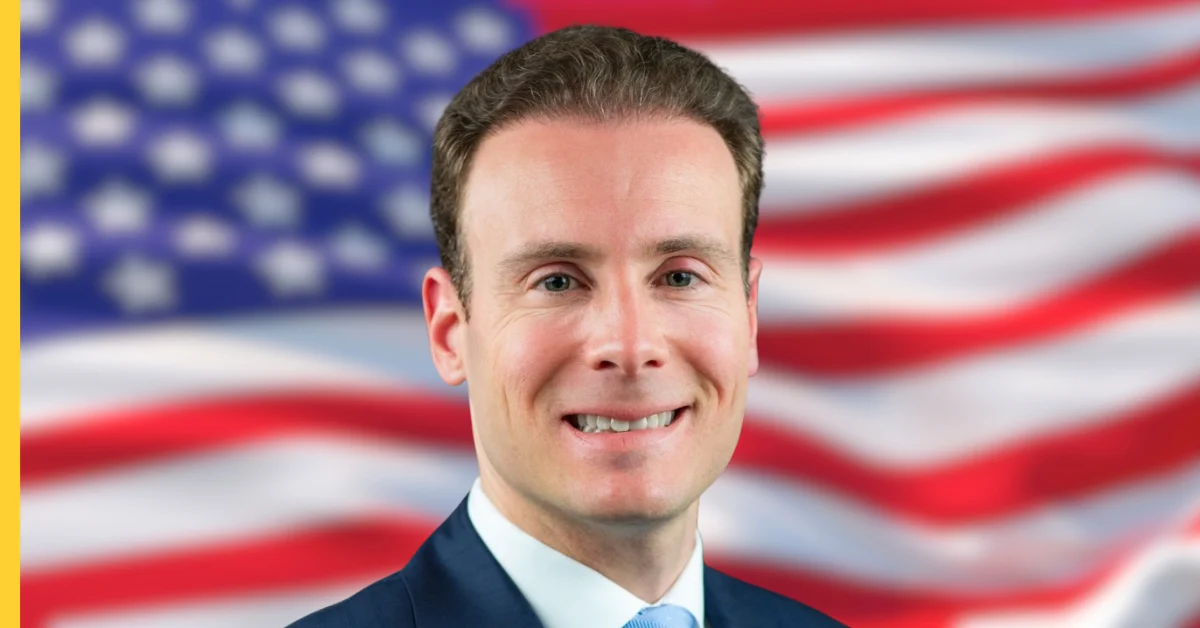
CFTC chairman Michael S. Selig said: “The CFTC will continue to safeguard its exclusive regulatory authority over these markets and defend market participants against overzealous state regulators.
“This is not the first time states have tried to impose inconsistent and contrary obligations on market participants, but Congress specifically rejected such a fragmented patchwork of state regulations because it resulted in poorer consumer protection and increased risk of fraud and manipulation.”
Everything focuses on the Commodity Exchange Act. The CFTC’s position is that derivatives, including contracts tied to future events, fall under its remit and cannot be reclassified by states.
The agency treats the contracts as financial instruments, whereas some states are attempting to classify them as wagering. That gap is where the conflict sits.
The CFTC warns that letting each state enforce its own standard creates a confusing patchwork, leading to real inconsistencies with different rules and uneven protections.
From its view, that’s where oversight starts to break down.
States unable to agree on prediction markets
The complaints point to what has already happened. In Arizona, regulators issued cease-and-desist letters, then escalated further by pursuing criminal charges against a CFTC-registered Designated Contract Market.
In Connecticut and Illinois, the approach was different but led to the same result. Administrative orders were used to shut down sports-related event contracts, with both states citing violations of their existing sports betting frameworks.
Tennessee and New Jersey have taken a different approach, with Kalshi able to secure support from the courts in both states.
The federal lawsuits now ask the courts to step in, halt further state action, and clarify who has the final say.
After taking over the CFTC last year, Selig has made the agency’s stance clear in recent remarks. The commission, he said, will defend its authority and push back where it sees overreach.
Earlier this year, on Selig’s order, the CFTC pulled back a 2024 proposal that would have banned political and sports event contracts outright.
In March, the agency issued an Advanced Notice of Proposed Rulemaking aimed at defining how prediction markets should operate under federal law.
The process will examine several issues, including margin trading for retail participants, safeguards against insider trading, and limits on contracts tied to prohibited subjects under the Commodity Exchange Act.
CFTC ready to assert control
The CFTC’s involvement in event contracts dates back to 1992 with the Iowa Electronic Markets, a small academic pilot.
The scope of its authority expanded after the 2008 financial crisis, when Congress broadened the definition of commodities to include a wide range of measurable events.
That expansion laid the groundwork for the modern growth of federally regulated prediction markets.
Legal analysis has pointed to possible serious consequences of the litigation.
Gaming attorney and analyst Daniel Wallach said that suing Illinois over a cease-and-desist letter that was issued a year ago could be a sign that there may be further federal action against other states.
He also noted that the move may allow states to challenge the non-enforcement of Rule 40.11(a)(1), which broadly restricts event contracts related to gaming.
Wallach added that the escalation could affect ongoing rulemaking on sports event contracts if courts determine Congress did not intend for the CFTC to regulate markets that resemble sports betting.
Kalshi, like Polymarket and others, has argued that it offers financial products, specifically swaps, and not sports betting lines. However, this approach may not hold up to legal scrutiny.
As Wallach highlighted separately, in its trademark filings for its prediction market platform and operations, Kalshi specifically described itself as a company offering “bookmaking services… related to sports betting.”