
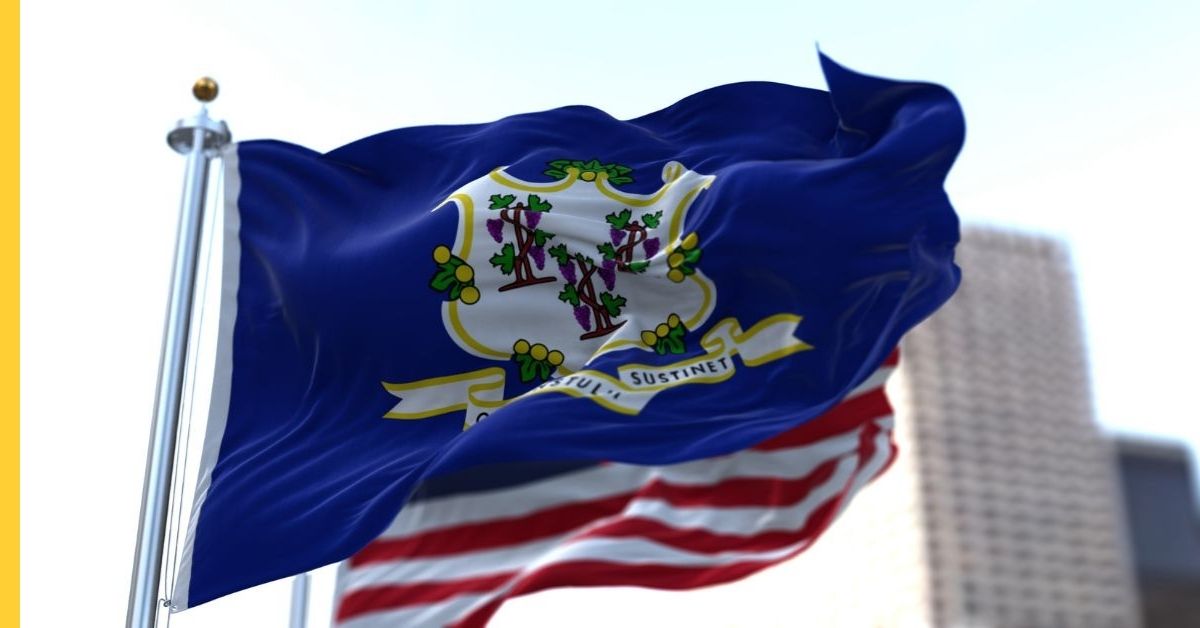
Age restrictions and certain advertising bans for prediction markets could be introduced under a new legislative bill in Connecticut, House Bill 5038 (HB 5038).
HB 5038 defines a prediction market platform as any service that allows consumers to open speculative positions on future events in a bid-ask format.
Under the bill, platforms operating in the state must implement age verification systems confirming a user is at least 21 years of age and physically present in the state before opening an account.
Operators must also establish voluntary self-exclusion tools allowing users to bar themselves from opening accounts, placing positions or exceeding set spending limits.
If an operator inadvertently permits an underage user to participate, it must immediately suspend the account and close the user’s positions. It must also return the funds and deny further access to the platform until the individual is 21 years old.
Advertising restrictions would include no advertising to consumers under the age of 21, including on college campuses, and no endorsements, images, or language appealing to the under-21 age group.
Civil penalties up to $10,000 per violation could be issued by the Attorney General, which may be increased to $50,000 for a continuing course of conduct.
The Department of Consumer Protection would be responsible for establishing and implementing regulations. It would also need to conduct a study in consultation with the Attorney General and the two federally recognised tribes in the state.
That study would examine youth participation, advertising practices, problem gambling impacts and revenue effects on master wagering licensees.
Connecticut has shown opposition to prediction markets in the past, but this measure seems to be a compromise.
If approved, the bill would take effect on 1 July 2027.
HB 5038 finds support from public organisations
A public hearing on HB 5038 was conducted on 18 February. Among those showing support was the Department of Mental Health and Addiction Services.
Its commissioner stated that prediction markets expose participants to financial loss and behavioural risks similar to gambling and high-risk speculative trading.
The agency reports that some clients receiving treatment for sports betting issues are also using prediction markets and describes a 21-year minimum as consistent with existing casino and sports betting standards.
The National Alliance on Mental Illness Connecticut also supported the bill, to a certain point. It explained that it does not support the gambling aspect involved, but understands the logic behind wanting to regulate the space.
It cited addiction risks for young people and brain development concerns. However, it aligns with state mental health and problem gambling officials in backing a 21+ age limit and advertising restrictions for prediction market platforms.
Governor Ned Lamont’s office supported the bill as well, arguing that prediction markets have blurred distinctions between investing and gambling and can be harmful to those under 21.
The Connecticut Lottery Corporation added support for a measured regulatory approach and requested inclusion as a participant in the mandated study, citing its role as a master wagering licensee and contributor to the General Fund.
Kalshi, state tribes hope to stop bill from advancing
There was also some public dissent against the measure for different reasons. A representative from Kalshi opposed HB 5038 based on the fact that prediction markets are federally, rather than state regulated.
Therefore, it argued, no action by the state should be able to take precedence over the federal guidance.
The Mashantucket Pequot Tribal Nation and the Mohegan Tribe also showed opposition to the bill, as they argued prediction markets based on gaming are already illegal in the state and regulating them could cause confusion and inadvertently legitimise offshore operators.
They pointed to ongoing federal litigation, including cases involving Kalshi, and the danger of conflict between the two.
The Tribes also claimed the bill jeopardises tribal-state gaming compacts, which have generated nearly $400m in recent tax revenue and over $9bn overall. They have asked lawmakers to do nothing until the courts clarify jurisdiction.
The University of Connecticut also submitted testimony, which was labelled as being partially against the bill.
The university warned that prediction contracts tied to collegiate or amateur sporting events pose integrity risks to student-athletes.
It supported age and advertising limits, but urged additional prohibitions on contracts based on college sports outcomes, citing harassment data and recent federal indictments involving alleged point-shaving schemes.
As this was just the first step for HB 5038, it still has to navigate the legislative process before being signed into law.