
Commodity Futures Trading Commission (CFTC) chair Michael Selig has said his agency will publish prediction markets guidance “in the very near future”.
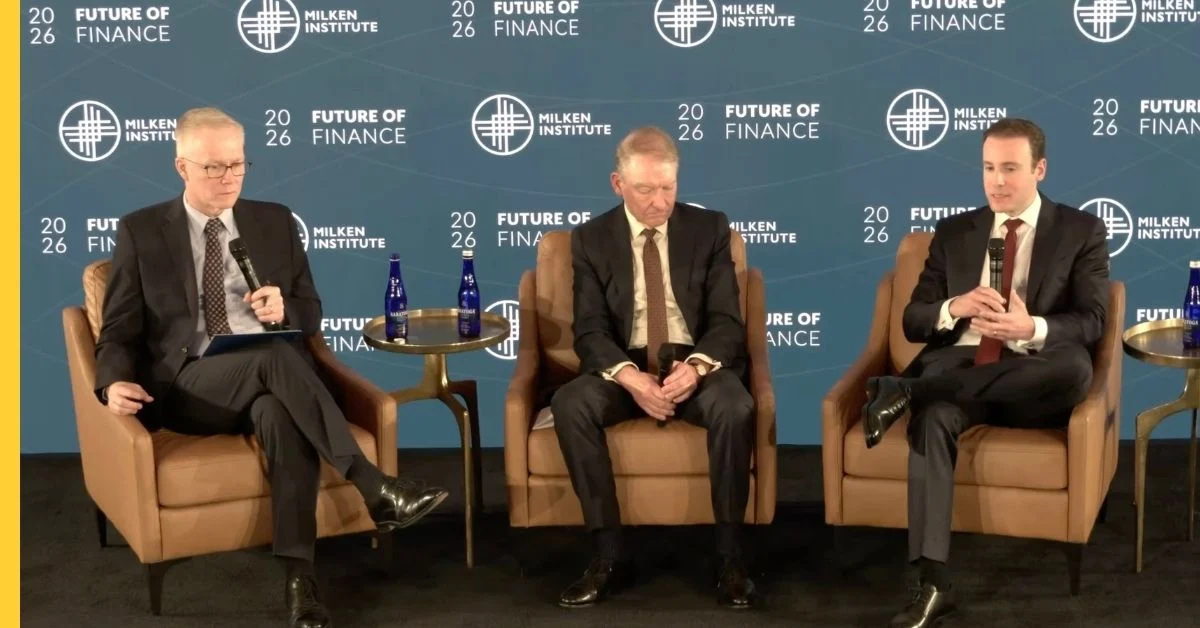
Selig made the comments during the Milken Institute’s Future of Finance 2026 conference in Washington, where he also outlined plans for a formal rulemaking process that would set clearer boundaries for the vertical.
The announcement is significant for operators in the prediction markets space because it further signals the federal regulator is moving to assert sole jurisdiction over event contracts in the near future.
This is a position that puts the CFTC on a collision course with state-level gambling regulators who have sought to bring some of these platforms under their own licensing regimes, with many legal observers arguing the matter will likely end up in the Supreme Court.
Selig was unambiguous about the scope of that authority, arguing that a patchwork of 50 different state regimes was incompatible with how derivatives markets function under federal law.
He said: “We’ve got to make sure that we don’t have 50 different regimes for our derivatives products across the United States.”
The official highlighted that the CFTC had already moved to defend that position in court, having filed an amicus brief in a federal case in Nevada.
He said: “We did file to assert our authority in that litigation, and are evaluating other avenues to make sure that our market participants have the ability to do business, to offer derivatives products, just as other federally regulated regimes are regulated under a single set of rules and regulations.”
‘States getting a little ahead of themselves’
Selig sought to draw a distinction between the CFTC’s regulatory framework and the environment in which state-licensed gambling operators function, arguing that the two regimes could coexist.
He said: “They’re able to serve a bunch of alcohol for free to people and let them go bet on sports. They’re able to use a bookie and be able to set the spread. Our products are very much heavily regulated and have stringent requirements. It’s a different regime. They can exist in parallel.
“We certainly don’t go into casinos to evaluate whether they’re offering legal over the counter swaps, but we make sure that we assert our authority where it makes sense and where we see states getting a little ahead of themselves.”
On the substance of the upcoming guidance, Selig said the agency would publish “very clear standards as to what can be self certified in our markets and what cannot, and how to evaluate the different products that are offered in the space.”
He added that the CFTC was also “planning to go forward with an advanced notice of proposed rulemaking in the near future that will set the stage for more fulsome rulemaking.”
The CFTC chair made a broader policy argument in favour of prediction markets, framing them as a counterweight to misinformation.
Selig added: “We’ve seen the disinformation, the hoaxes, the fake news, and all of the ability of certain individuals to control gatekeepers and make sure that the polls say what they want them to say right before an election. But the prediction markets tend to get it right.”
He also warned that heavy-handed regulation risked pushing activity offshore, continuing: “The more we try to block these markets, we saw it with crypto, it just goes offshore. So, my view on this stuff is that we’ve got to set the right rules and regulations for it here in the United States, or otherwise we’re just going to have black markets offshore.”