
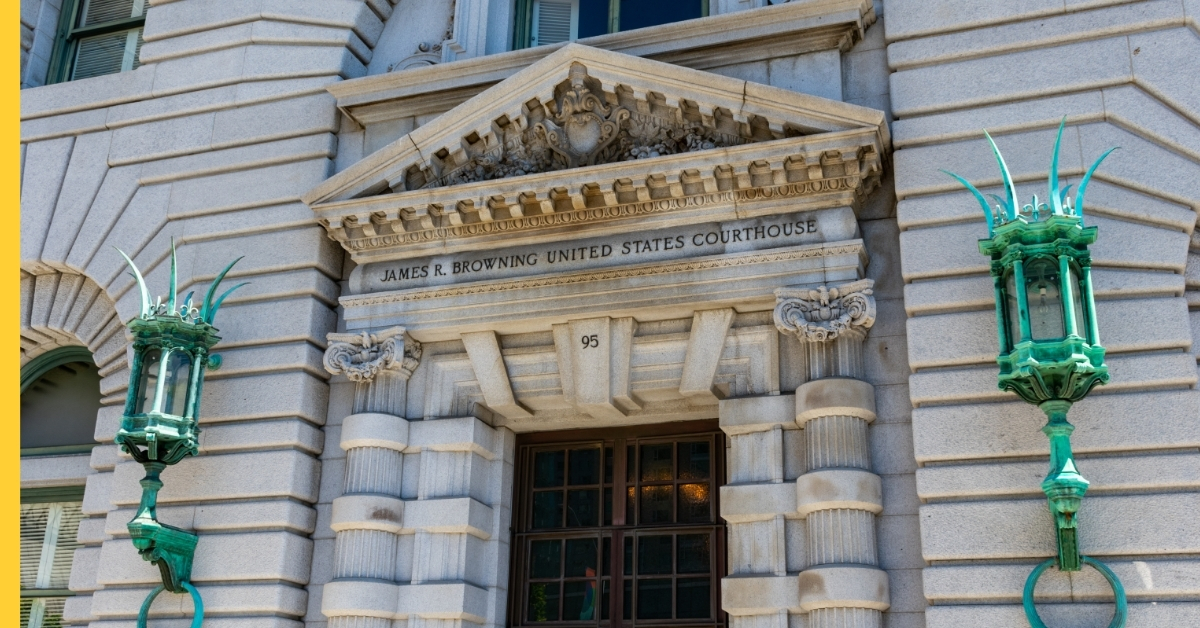
A three-judge panel of the Ninth Circuit Court of Appeals heard arguments yesterday (16 April) in a dispute over whether Nevada can block prediction market platforms from operating within the state.
The consensus following the hearing is that it did not go in favour of prediction market operators.
The hearing brought together appeals from North American Derivatives Exchange Inc., Kalshi and Robinhood. Each is challenging Nevada’s prohibition on event-based contracts tied to outcomes such as sports results.
Representatives of Nevada, including the Nevada Gaming Control Board and the Nevada Resort Association, have stated that the federal statute regarding commodities does not preempt the state’s authority to regulate gambling.
According to Nicole Saharsky, an attorney representing the State of Nevada, there is no apparent congressional intent within the Commodity Exchange Act to do so.
Those who followed the hearing took this as a possible omen about what might be in store when the appeals court issues its decision.
Lawyers for the platforms presented a broader interpretation. They argued that any contract where payment depends on whether an event occurs should qualify as a swap under federal law.
Because such instruments trade on federally regulated exchanges, they said oversight should lie exclusively with the Commodity Futures Trading Commission (CFTC).
The debate centred on how to interpret federal rules introduced after the Great Recession. The plaintiffs pointed to the Dodd-Frank Act, which expanded the CFTC’s authority to define and regulate swaps.
They argued this framework grants the agency sole jurisdiction over event contracts, including those tied to sports.
CFTC Chairman Michael Selig also referred to this repeatedly in his testimony during a recent appearance before a House committee.
CFTC’s own rules used against prediction markets’ arguments
In the Nevada vs. prediction markets hearing, Nevada countered by highlighting a 2011 CFTC rule that restricts certain categories of contracts.
Specifically, subparagraph 1 of Rule 40.11 states that an entity cannot list for trading “an agreement, contract, transaction, or swap based upon an excluded commodity, as defined in Section 1a(19)(iv) of the Act, that involves, relates to, or references terrorism, assassination, war, gaming, or an activity that is unlawful under any State or Federal law.”
State lawyers maintained this provision reinforces Nevada’s ability to block such markets locally.
The Ninth Court panel that heard the arguments included Judges Ryan Nelson, Bridget Bade and Kenneth Lee. All three were appointed in 2018, when President Donald Trump was serving his first term as president.
Judge Nelson signalled skepticism toward the platforms’ position. During exchanges with counsel, he pointed to the rule’s language and questioned how it could be interpreted to allow the disputed contracts.
His remarks suggested the panel may view the federal restriction as directly applicable.
Attorneys for the platforms, alongside the CFTC, argued that exchanges can self-certify contracts under existing rules. They said the CFTC retains authority to intervene but has not done so in these cases.
The case arrives amid conflicting rulings in other jurisdictions. Earlier this month, the Third Circuit Court of Appeals ruled in favour of Kalshi in a separate dispute with New Jersey regulators.
That decision found that sports-related event contracts fall within the federal definition of swaps and are therefore under exclusive CFTC oversight.
Nevada’s legal team challenged that reasoning, arguing it glossed over key statutory limits and the explicit restrictions embedded in federal rules.
The panel did not indicate a timeline for a decision, though Judge Nelson said a ruling would be issued as quickly as possible.