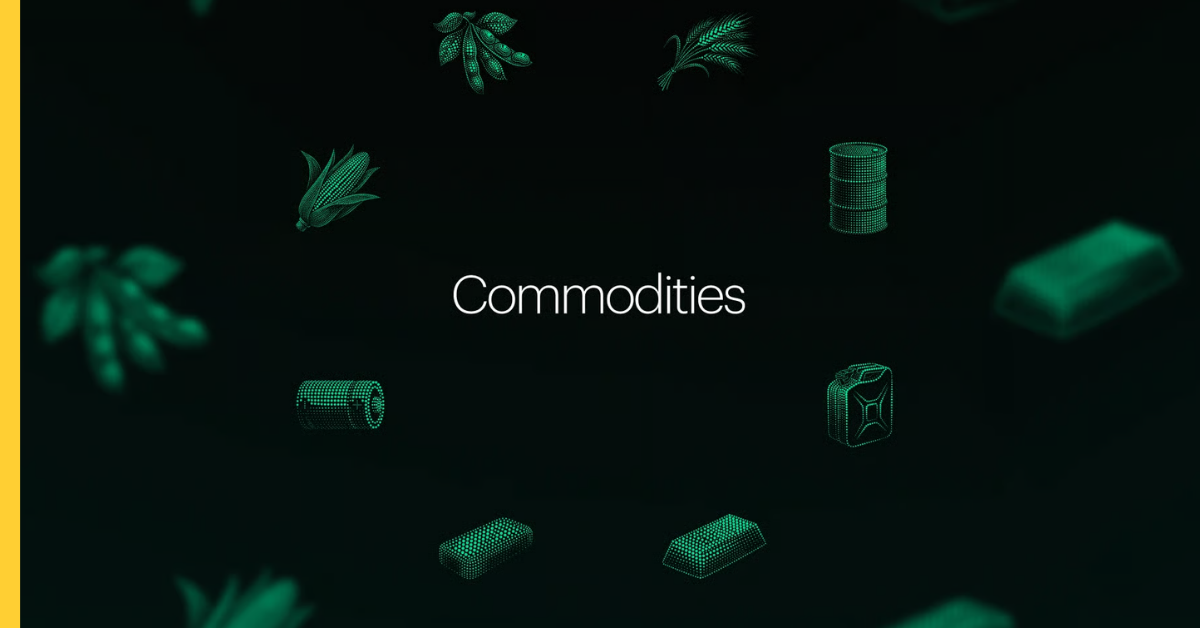
Kalshi has launched a new Commodities Hub, extending its event-contract marketplace into resource-linked markets tied to commodities such as gold, silver and crude oil.
The move broadens the exchange’s offering beyond sporting, political, economic and cultural outcomes into assets traditionally dominated by institutional trading desks.
The platform structures these contracts around binary outcomes. Traders take positions on whether a commodity will meet a defined price level within a set timeframe.
The design strips out settlement complexities common in futures markets, replacing them with a fixed yes-or-no payoff structure that resolves at expiry.
Examples of options are the upward or downward movement in the price of gold or another commodity, or whether crude oil will reach a certain price in a given timeframe. Markets on coffee, sugar, corn and more will also be available.
This approach contrasts with legacy commodities exchanges, where participation often requires margin accounts, leverage management, and exposure to rolling contracts.
Kalshi’s format reduces those barriers, allowing smaller participants to access price speculation without dealing in physical delivery or contract rollover mechanics.
This results in a simpler approach to accessing the markets, which have traditionally been closed to retail investors. Gold and silver are gaining more popularity due to growth in the energy and metal markets.
Whenever currency markets appear unstable, investors prefer gold and silver. Crude oil is equally important for industries and is abundant worldwide.
Kalshi has built the hub to integrate live pricing feeds alongside execution tools. Users can track price thresholds and enter positions within the same interface.
A work in progress
Infrastructure has been scaled to accommodate higher participation volumes, with liquidity provision expected to expand as the user base grows. Early trading activity will likely determine how efficiently spreads tighten across these new markets.
Beyond access, the model carries an educational dimension. By reframing commodity movements into discrete event outcomes, the platform translates macroeconomic signals into clearer decision points.
That structure may help newer participants interpret price drivers such as inflation expectations or production shocks. The format does not remove risk, but it alters how that risk is presented and understood.
Kalshi’s expansion reflects a broader shift in how financial exposure is packaged for retail audiences. The Commodities Hub introduces a pragmatic extension of event-based trading into core global resources.
Further asset classes may follow, but the immediate focus remains on refining execution, liquidity, and user comprehension within these initial markets.