
A Supreme Court decision on prediction markets could drop as soon as next year, a prominent gaming lawyer has said.
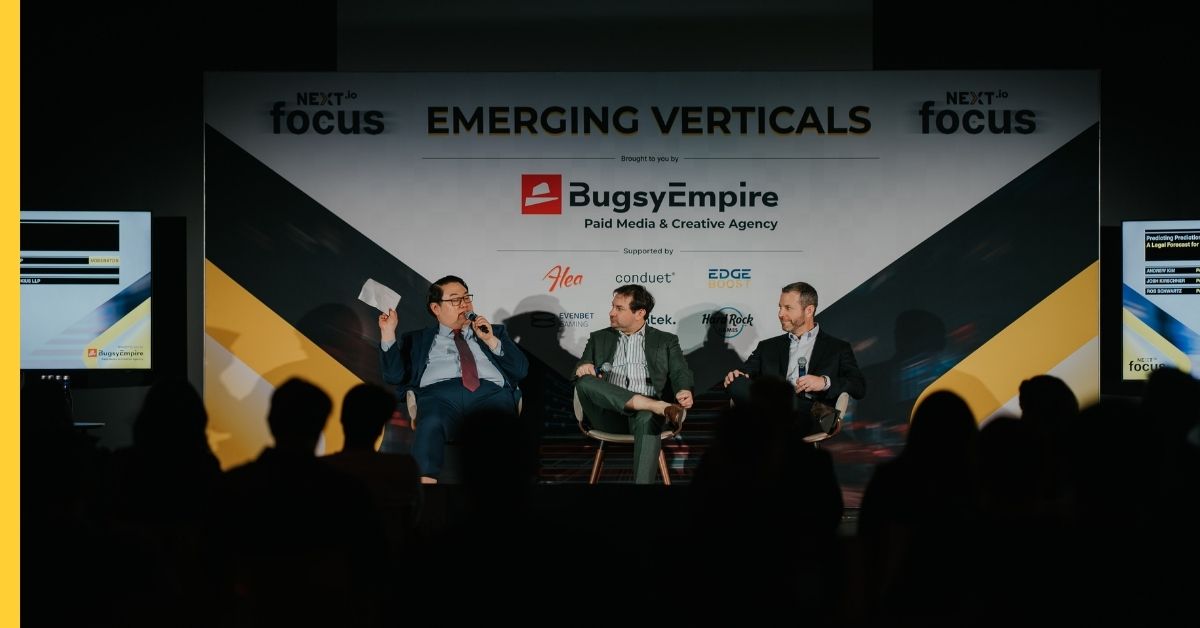
Speaking on a panel at the NEXT Focus: Emerging Verticals event in New York yesterday (9 March), Goodwin Proctor LLP partner Andrew Kim untangled some of the legal complexities relating to prediction markets and said we could conceivably get a Supreme Court decision in 2027.
It comes amid continued legal uncertainty about the future of the emerging vertical, which is currently upending the US online sports betting state of play.
This has included a complex array of court cases throughout the American legal system as state regulators, prediction market operators and others clash over whether the CFTC has the authority to regulate sports event contracts.
Kim, who has himself argued in front of the Supreme Court, said: “It’s hard for any of us to predict what exactly the court is going to do, but I think we have a fair sense of what the court is looking for.”
He highlighted that the highest US legal authority wants federal courts and state supreme courts to disagree with each other on legal issues before it opts to take on a case.
‘No one knows what the Supreme Court is going to do’
Kim continued: “We could conceivably get a decision as soon as the next year and a half … [but] it could be much further down – it could be 2029 and so I think a lot of this depends on what the courts of appeals decide.”
The lawyer argued disagreements between these courts “seems almost inevitable”, adding “it would surprise me if one side, the states or the prediction markets ran the table”.
Also appearing on the panel, former CFTC General Counsel Rob Schwartz argued that “no one knows what the Supreme Court is going to do” and added that it could be perfectly possible for a future presidential administration to unwind some of the recent changes.
Nelson Mullins partner Josh Kirschner, who was also speaking, highlighted that “judges are humans too”, arguing they could share the basic discomfit some have felt towards sports trading being legalised under a future contracts framework.
He said: “I think it’s a tale as old as time, going back to Potter Stewart: ‘I know it when I see it’, when we talk about pornography.”
Kirschner continued: “Judges are going to look at this just like the residents, just like regulators do. And we all know that feeling.”